Dutch things in the US

By admin , 6 February 2011

Since the 1950's, tens of thousands Dutch-Indonesians emigrated to the United States from the Netherlands. The majority moved to Southern California and Los Angeles is now home to the largest Dutch Indo community, with some 100,000 people.

This weekend the Los Angeles Times writes about the Dutch-Indonesian community:

The California dream represented a myriad of personal and professional opportunities for the Indo diaspora. More than a few followed family and friends who had already arrived on the West Coast. Some traveled coach across America in bumpy railcars from the East Coast, tired of the same chilly climate they’d so disliked in the Netherlands. For a few, collecting fan cards of favorite actors and memorizing lyrics to big-band songbooks had made the Golden State a beacon since childhood. And for all practical purposes, it was a logical choice: The postwar economy boomed, jobs and housing were plentiful, schools were good and, much like in Indonesia, the weather was glorious year-round. They may have longed for home, but they knew they could belong here.

The article mentions the Indo Project, an English-language resource for Dutch-Indonesians in the U.S.:

Bianca Dias-Halpert, who was born in the Netherlands and raised in the U.S., has spearheaded the Indo Project, one of the few English-language cultural resources. “The Indo Project has been a work in progress since 2005,” she says. “There’s a wealth of information about us in Dutch, and the community in the Netherlands is well connected, but there’s almost nothing here. After a visit back to Holland, I saw how disconnected we were from our culture.”

LA Times: The Long Way Home.

Topic
By admin , 3 February 2011

Dubbel Dutch is a Dutch store and lunch place in an eclectic neighborhood in Denver, Colorado. A bright orange storefront tells you that you have found a piece of Holland.

"I started Orangepackage.com, an online Dutch store, ten years ago", says Eef Tulp, the owner. "I came to the United States with Hewlett-Packard, where I worked as a marketing program manager. Orangepackage.com started in my basement, and I shipped packages with Dutch food from there. Business started to increase, and I noticed that a lot of customers would come visit me in that basement. So, three years later I opened my store."

The store is small but cozy, with five seats inside and some outdoor seats. The left wall is occupied by large shelves full with Dutch products and behind the lunch counter you'll find Eef, or one of the other Dutch ladies who work in the store.

Dubbel Dutch is located near Rigers University and is a popular destination for lunch. "It's about half-half -- we get local customers who come here for our sandwiches as well as Dutch folks from the entire region", says Eef.
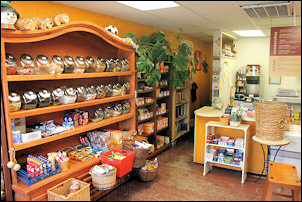
Dubbel Dutch attracts has won several awards for its sandwiches, such as Best Sandwich of Denver. Of special note is the Old Amsterdam sandwich -- it's a delicious "broodje gezond" on a fresh baguette with Old Amsterdam cheese. A big part of the success of the sandwich store is the bread which is super fresh and delivered daily by a European bakery. Dubbel Dutch serves Douwe Egberts roast coffee .

The store serves as a hub for the Dutch community in Denver. "We organized a big New Year's celebration last week", says Eef, "with oliebollen and a large crowd of Dutch people. It was a lot of fun". The New Year's celebration at Dubbel Dutch is a tradition. "We have a good relationship with the Dutch clubs in the area, and we coordinate the events so there's no duplication. They organize the Sinterklaas celebration for example, and we do the New Year's oliebollen party."

Dutch items available in Dubbel Dutch include speculoos, Heinz sandwich spread, van Gilze stroop, mixes for Dutch pancakes and poffertjes, anijsblokjes, Dutch mustards, Maggi and Conimex products and many more. The store carries multiple types of stroopwafels, windmill cookies and liquorice. The cheese cooler is filled with various cheeses and some meats. Bitterballen and kroketten are available as well.

Dubbel Dutch
4970 Lowell Boulevard
(303) 480 9100
http://www.dubbeldutchdenver.com
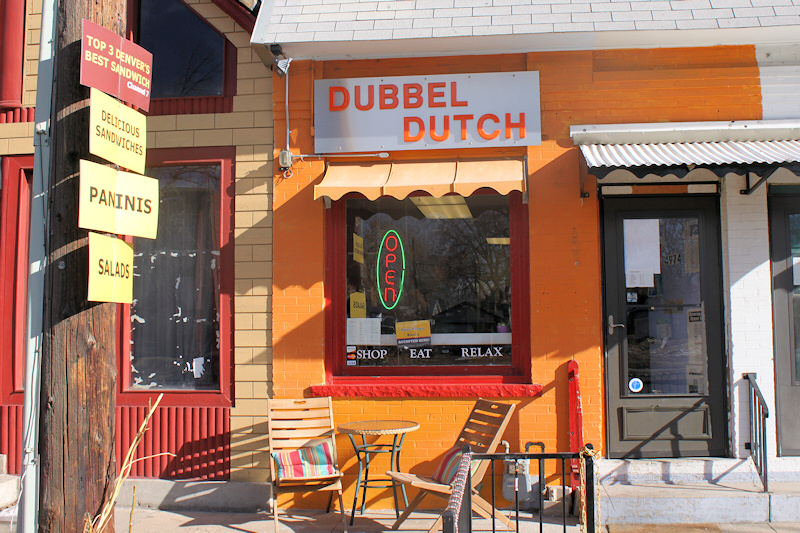
The orange store front.
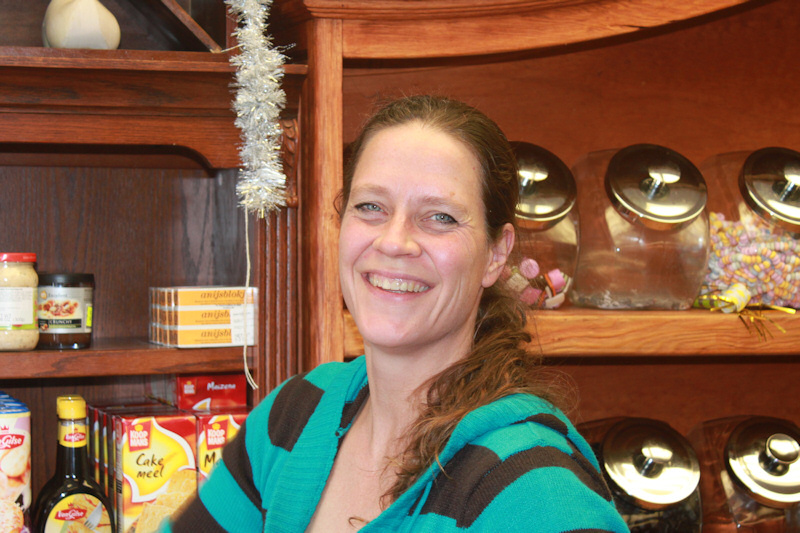
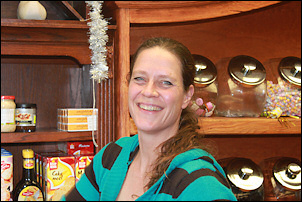
Owner Eef Tulp.
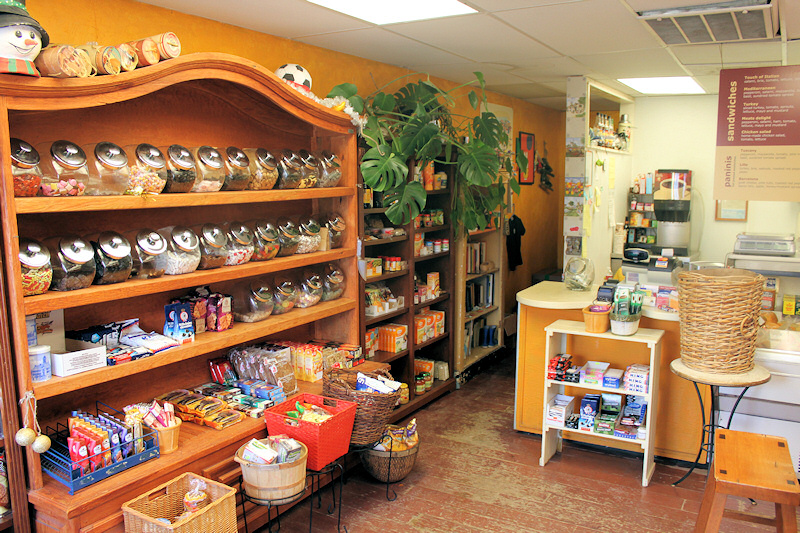
Interior of the store.
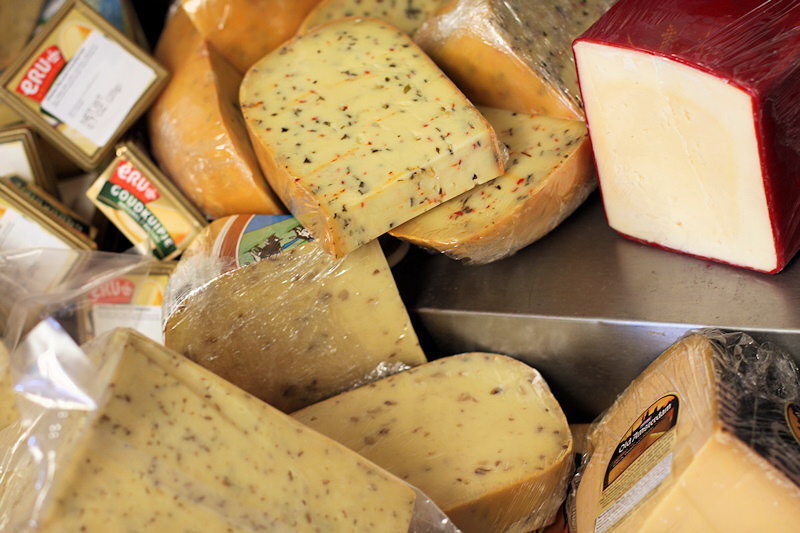
The cheese selection includes Old Amsterdam, Goudkuipje, Leyden cheese with cumin, Gouda with herbs and many others.
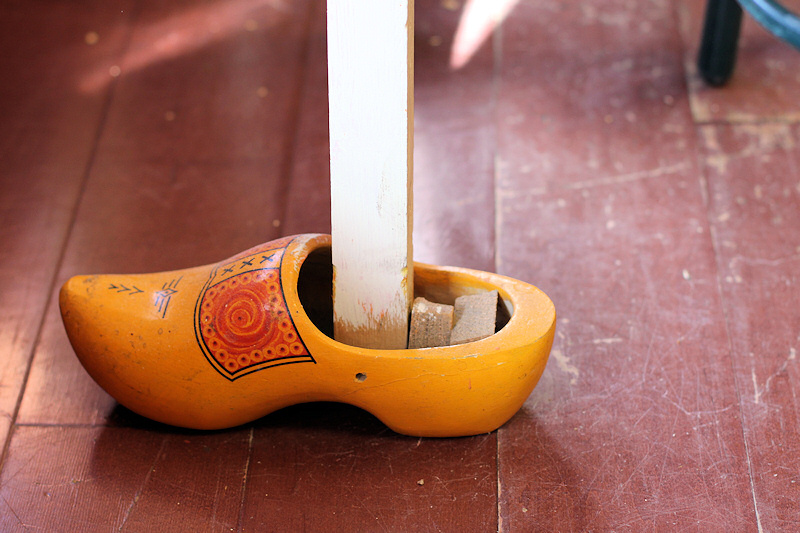
A wooden shoe to help support the table.
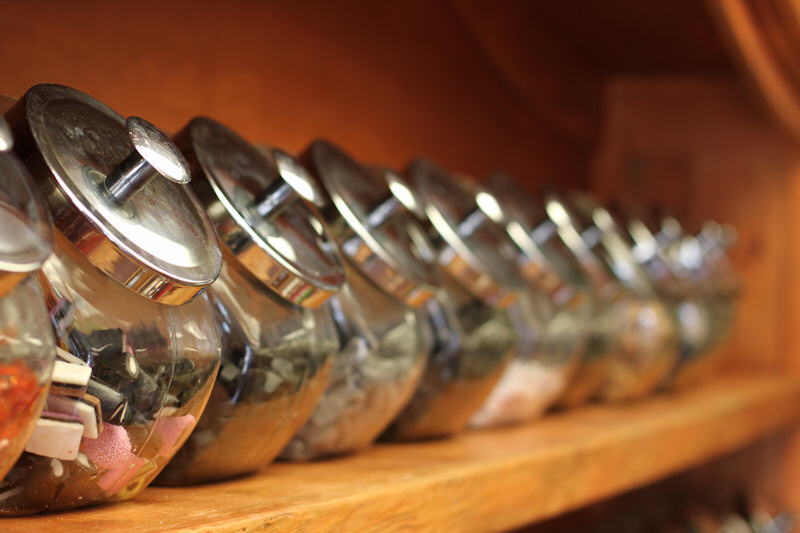
Many different varieties of drop are available. The store sells drop in high volume, and it tastes very fresh.
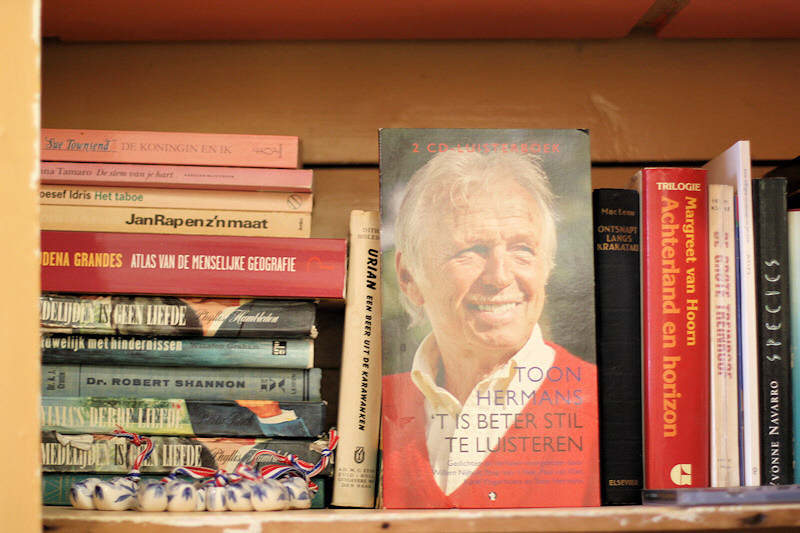
Books for sale, trade or borrowing.
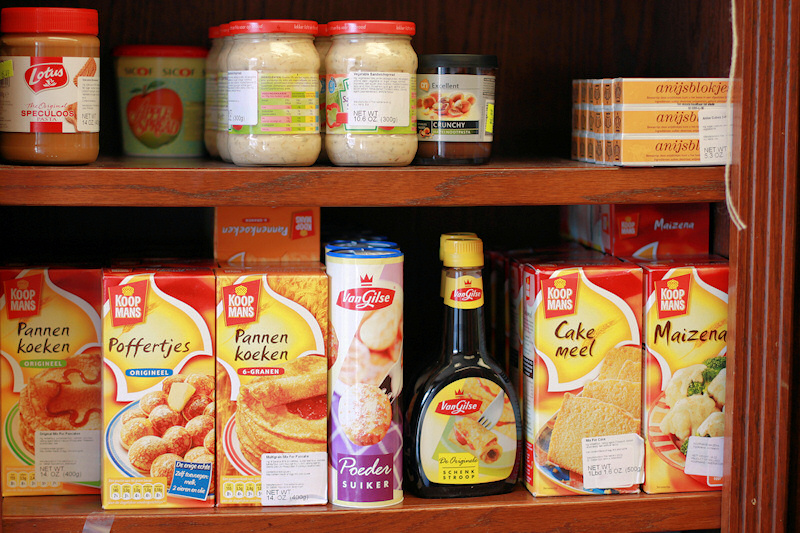
Dutch items.
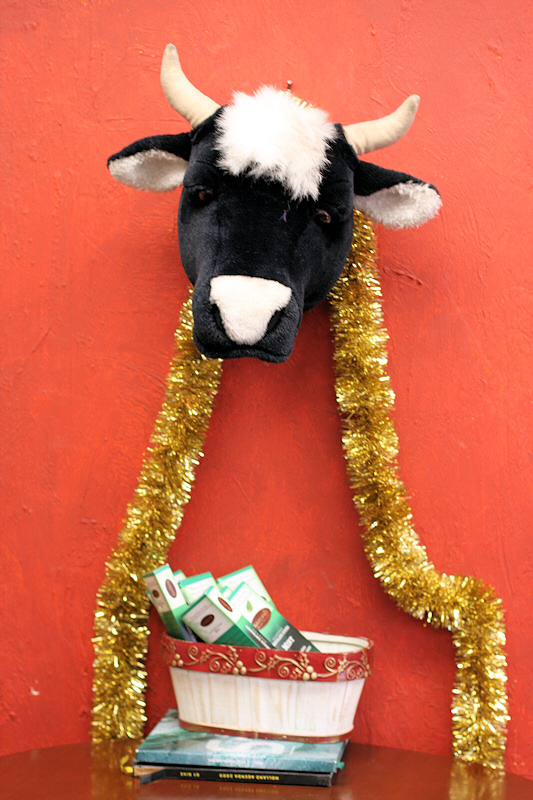
A cow decorates the wall.
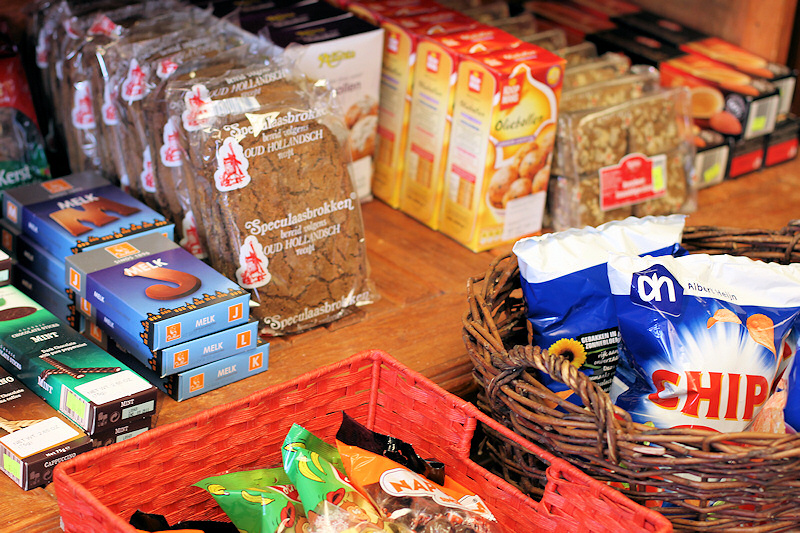
We visited the store in early January, and there were still a few chocolate letters and speculaas cookies left. Note the paprika chips, a flavor that can't be found in regular stores in the U.S.
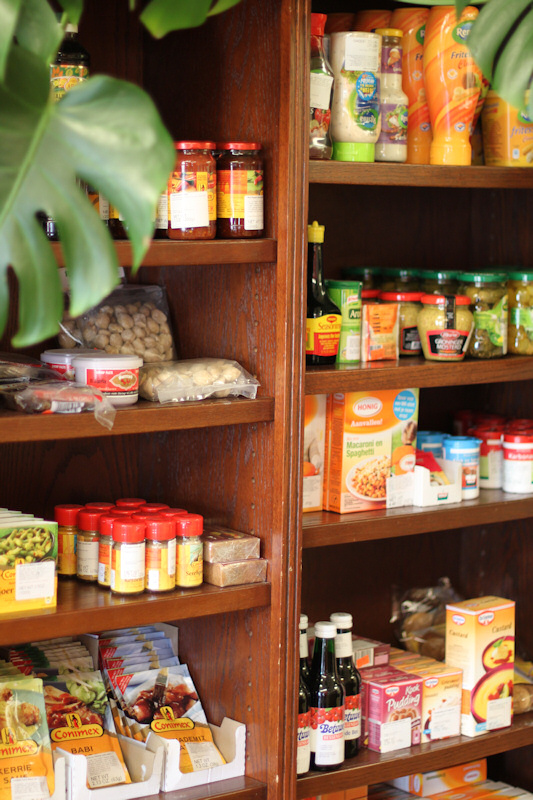
Indonesian condiments.
Tulips.
Topic
By admin , 19 January 2011

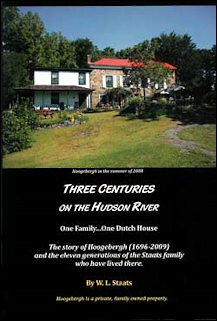
"Three Centuries on the Hudson River" is a book about Hoogebergh, a 1696 family homestead in upstate New York, and the eleven generations of the Staats family who have lived there.
The field-stone house was built on land deeded by Killaen Van Rensselaer to Joachim Staats whose father, Abraham Staats (born 1617, died 1694), came to America from the Netherlands in 1624. It is located on the east bank of the Hudson River about five miles south of Albany, New York and has a commanding five-mile view of the river.

The book tells both the history of this Dutch-American house and of the Staats family. It starts off with a foreword written by Shirley Dunn, a Rensselaer County historian, and then describes the early history of the house, which is listed on the National Register of Historic Places. The book is a worthwhile read for those interested in the history of an iconic Dutch-American house in the upper Hudson Valley. The family anecdotes, mostly from the 20th century, are often funny and give a fascinating insight in growing up along the Hudson river.

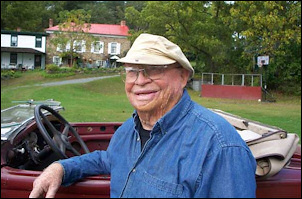
William Staats

The book is written by William Staats, a 9th generation Hoogebergh inhabitant. He is professor emeritus from accounting and computer studies at Hudson Valley Community College. Mr. Staats provided us with a copy of his book. When asked why he waited until age 77 to write it, he replied: "because I was coerced by my niece who reasoned that something should be in print about this remarkable Dutch heritage".

Mr. Staats, the father of seven and the grandfather of fifteen, still drives the 1931 Model A Ford roadster which his mother bought as a used car in 1937, and clearly enjoys writing about his childhood and the Hoogebergh homestead.

“It took me about 10 months to write the book, and about as much time was spent by my capable editor and formatter, Edith Leet. Most of the research was done by my now-deceased sister-in-law, Connie, who did so much genealogy work. The anecdotes were from pure memory.”

History of Hoogebergh

After the chapters on the early history of the house, which includes anecdotes of a daytime stop over by General George Washington and a bullet marks from an incident hundreds of years ago that are still visible, the book describes the experiences of recent generations of inhabitants. In the 19th century the family built a huge ice house on the property, which was demolished 50 years later when the ice house business disappeared due to electrical refrigeration.

The ninth generation made it through the Great Depression in spite of the death of their father who left behind a courageous widow with seven young children and no social security or insurance. Only the generosity of an unmarried uncle and their maiden aunt, who opened the doors of their cramped rented row house in Rensselaer, saved the family from foster care. The Hoogebergh house served as an important weekend refuge for the family. Staats: “We didn't have much money, but we had a lot of fun!”

In 2009 a filming crew from the Netherlands visited the house, and the Dutch ambassador to the United States came over for a dinner evening at the homestead. In the late 20th century ownership of the house was transferred to a family foundation, with family members holding shares, securing the homestead for future generations.

"Three Centuries on the Hudson River. One family, one Dutch house."
Author: W.L. Staats
ISBN 978-0-578-06243-3
124 pages, paperback
http://www.onedutchhouse.com

Topic
By admin , 21 December 2010

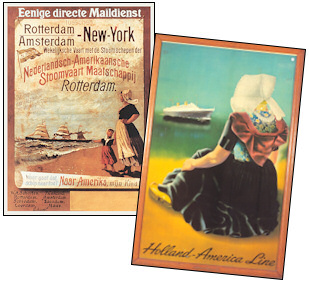
Cruise company Holland America Line will offer two nostalgic trans-Atlantic crossings next summer, re-sailing the classic itinerary from Rotterdam to New York City.
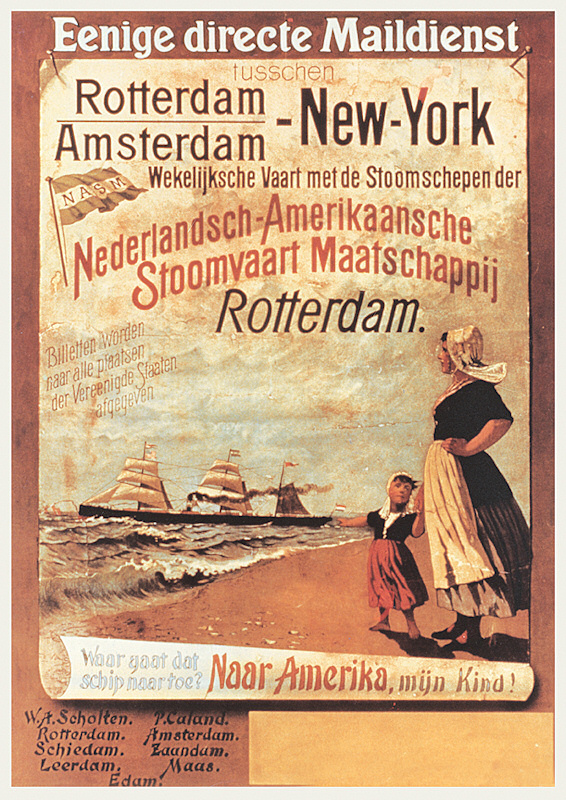
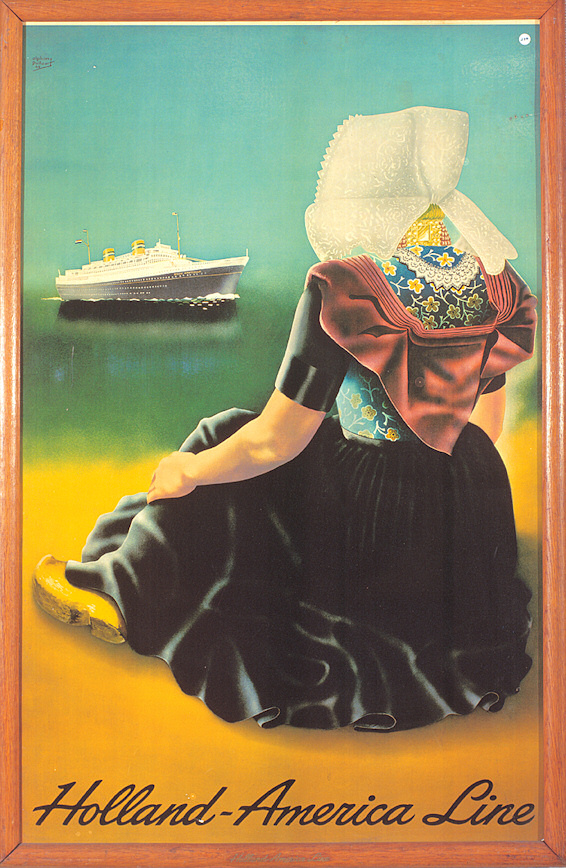
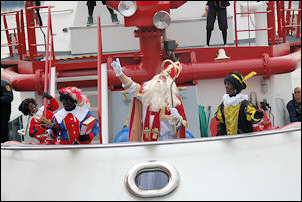
Holland America Line was founded as the Nederlandsch-Amerikaansche Stoomvaart Maatschappij and offered its first trans-Atlantic crossing from New York to Rotterdam in 1872. Thousands of Dutch immigrants arrived in the United States with ships like these in the 19th and early 20th century.

Holland America Line last offered a classic trans-Atlantic crossing in 1971. To commemorate this 40 year history, two here-to-there crossings are planned for 2011. Another cruise company, Cunard Line, still offers regular crossings with its ship the Queen Mary 2.

”Proud to honor our heritage”
"Trans-Atlantic cruises were the foundation of Holland America Line for several decades, and there's still a strong desire from today's travelers who want to step back in time and relive the celebrated days of an elegant crossing or follow in the footsteps of their ancestors," Holland America executive vice president Richard Meadows says in a statement. "We're proud to honor our heritage with these two special itineraries."

Stops in Cork and Southampton
Rotterdam’s nine-day trans-Atlantic sailing departs from Rotterdam, the Netherlands, on July 3, 2011, and calls at the traditional crossing departure port of Southampton, England, before heading to New York. Dutch Chef Cas Spijkers is scheduled to sail on the July 3 crossing. The July 12 trans-Atlantic departure returns to Rotterdam from New York over nine leisurely days with a call at Cobh (Cork), Ireland, another time-honored stop on crossings of the past.

The line says the voyages will include nostalgia-themed dinner menus and entertainment, special guest lectures, and the presence of a temporary "museum at sea," among other crossing-related features.

Poster Holland America Line in Dutch, ca. 1880.

Poster Holland America Line, 1949. Images courtesy Holland America Line.

Topic
By admin , 6 December 2010

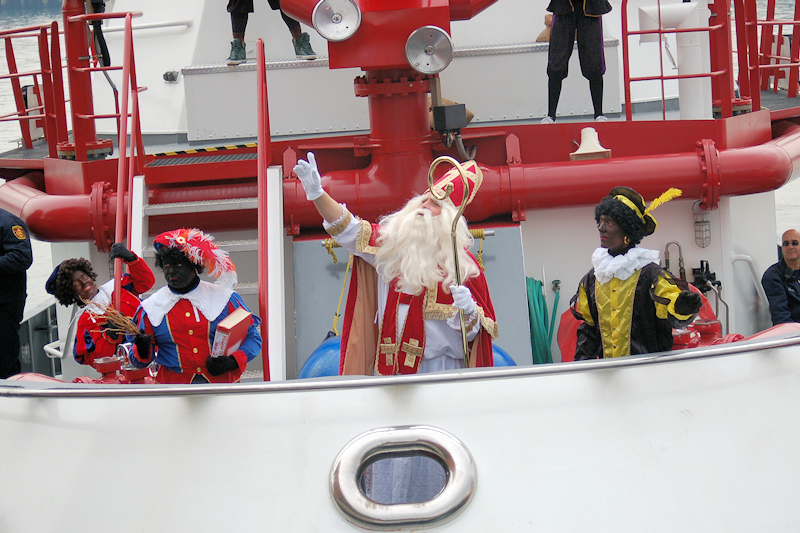
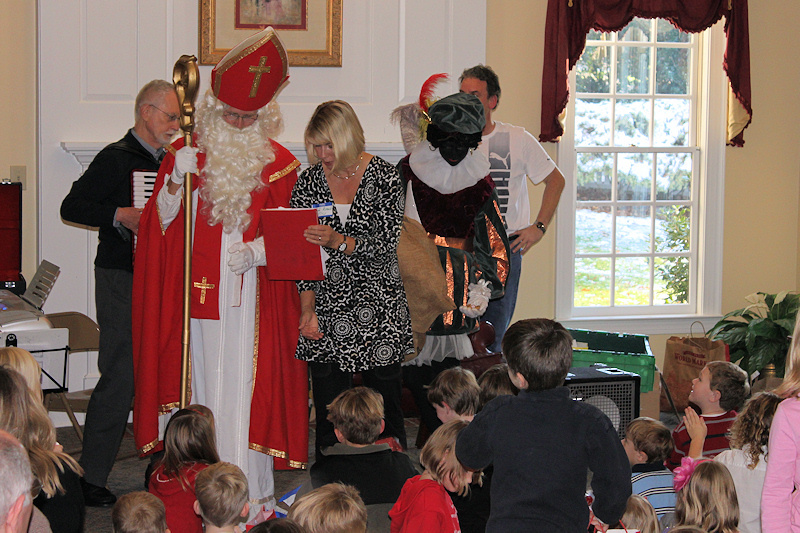
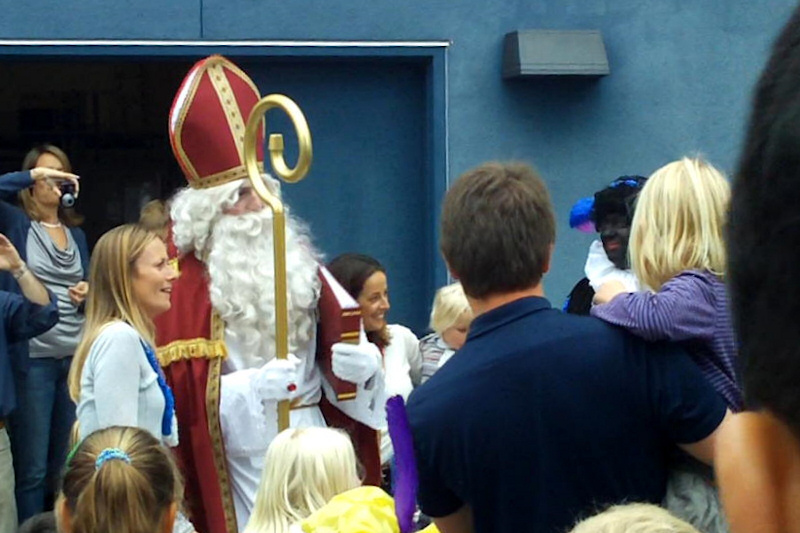
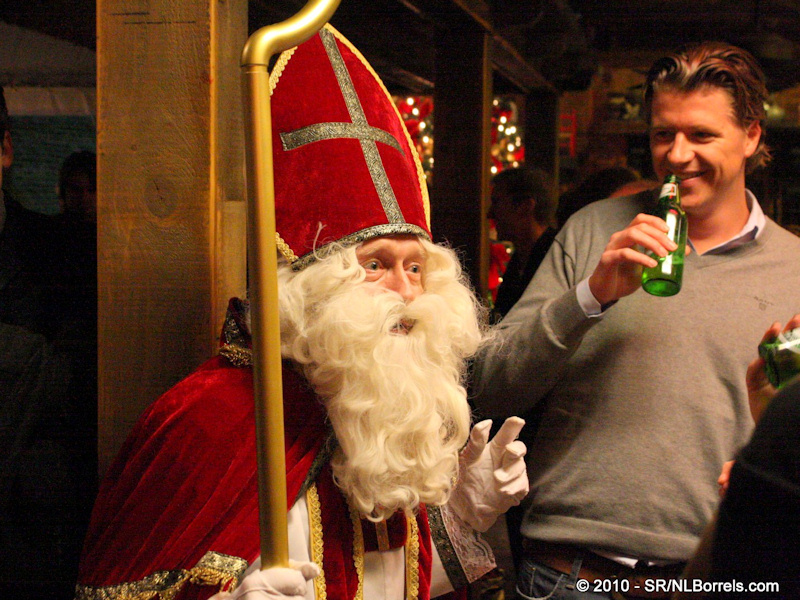
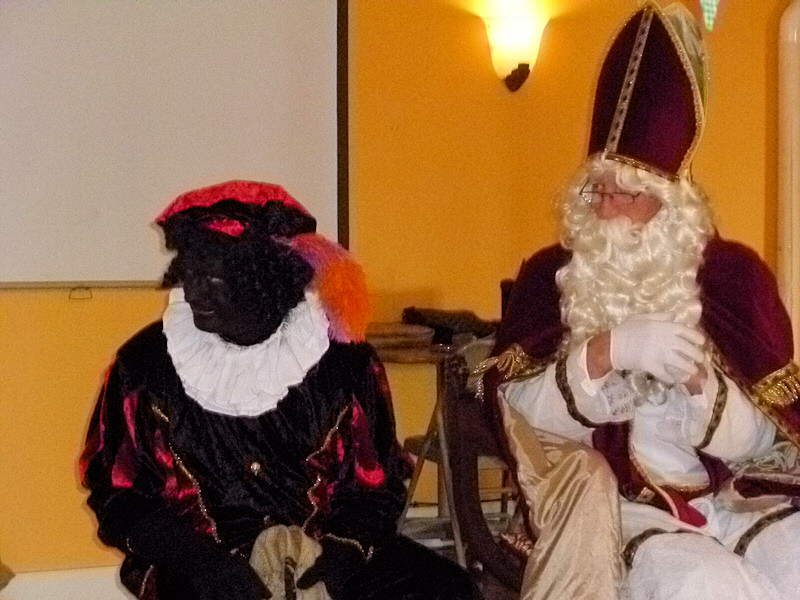
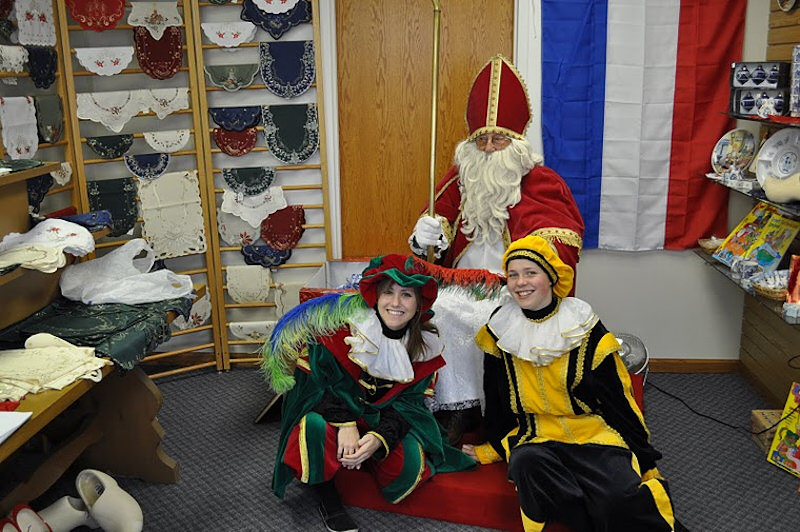
December 5th is traditionally the day for Saint Nicholas celebrations and this weekend there were many events organized by the Dutch-American community. Our calendar showed more than 20 public appearances by Saint Nick in the United States.
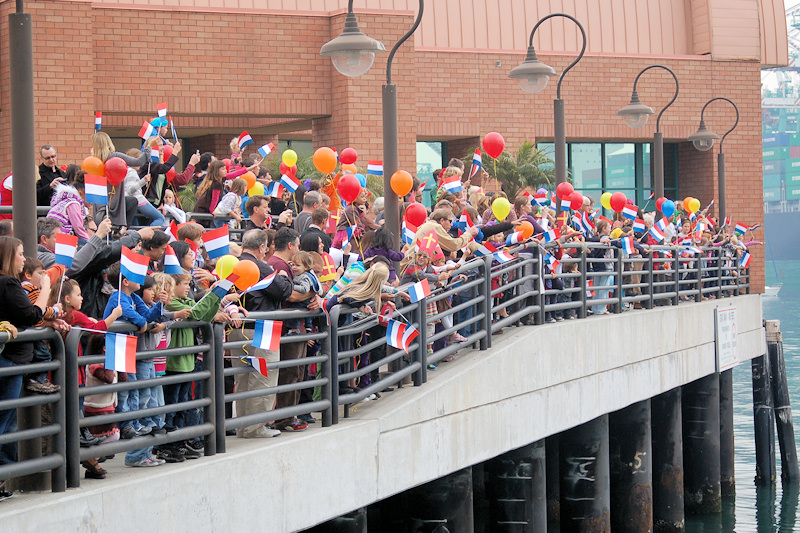
Of special note was the arrival of St. Nick in the Los Angeles harbor, organized by the Dutch School of Los Angeles. With help of the LA Harbor fire department St. Nick and his helpers arrived by boat to a huge crowd of children.

Below you'll find a selection of photographs of those events this weekend; there are many more on our Facebook page.

Saint Nick in Los Angeles.

A big crowd of children waiting in Los Angeles. Photos courtesy of the Dutch School Los Angeles & Caroline Verhagen.

Saint Nick in North Carolina, in a celebration organized by Dutch Club De Wieken.

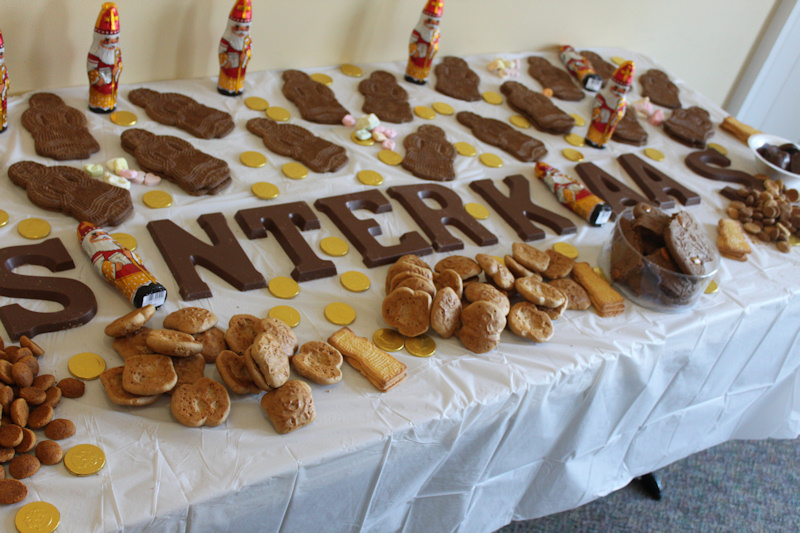
Chocolate letters and speculaas.

In Solana Beach, California, organized by the Dutch School San Diego, the San Diego Dutch Meetup group and the San Diego Belgian Meetup group. Photo courtesy of Tjitske Zitman.

Sinterklaas in New York city Friday night. Photo courtesy of NLBorrels.com; see more on their Facebook page.

Sinterklaas arriving in Virginia Beach, VA. Photo courtesy of Bas van Rijswijk.

Sinterklaas at the Dutch School in Boston, MA. Photo courtesy of http://www.ensib.org.

Saint Nicholas in Michigan. Photo courtesy of Michigan Cottage Cook, a blog about Dutch heritage information and interesting links to all things Dutch.

Topic
By admin , 29 November 2010

Employees of the Royal Dutch Embassy in Washington D.C. were arrested Sunday night in a bar in New York City after allegedly fighting with two police officers. They were released on bail Sunday night and face various misdemeanor charges.

According to the New York Post three Dutch Embassy employees and an American friend allegedly skipped out on a $300 tab at Arthur's Tavern. The two men in the group are charged with physically attacking the waitress who chased them down the street, and then jumping the police offers who showed up to break up the fracas -- leaving one officer with a broken finger and another with a chipped tooth. The embassy employees counter that they tried to pay the bill, but their credit card was rejected and that the waitress threw the first punch.

The Dutch Ministry of Foreign Affairs did not confirm the account by the New York Post, and is waiting for the result of a hearing this Friday.

More details in the Wall Street Journal.

Topic
By admin , 13 November 2010

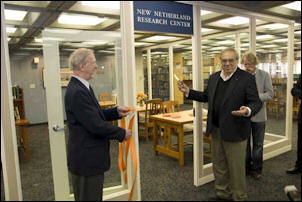
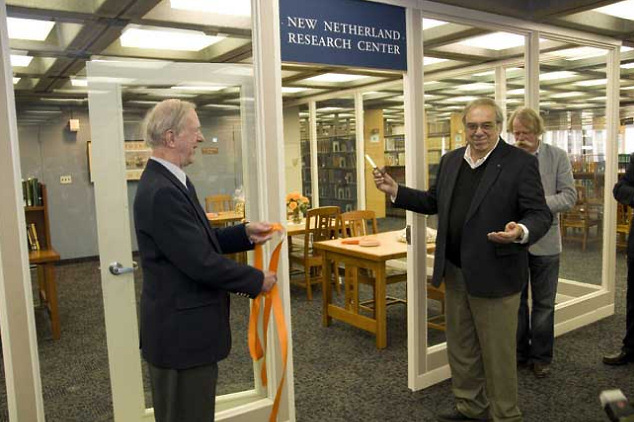
A ribbon-cutting ceremony on Wednesday, November 3 officially opened the New Netherland Research Center in Albany, New York. The center will focus attention on New York State's rich collection of historic Dutch Colonial documents and facilitate access to them for future scholars, teachers and students.
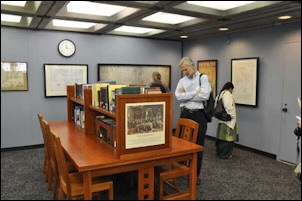
Opening up Dutch history

The New Netherland Research Center is the culmination of a decades-long translation effort at the New York State Library, the New Netherland Project. Dr. Charles Gehring is the project's Director and principal translator. "This gives researchers a nice room where everything they need is located in one place," said Gehring in the Albany Times Union. "It gives us a visual presence in the library. I'm excited, even though it took more than 30 years."

"This is fantastic because it opens up so much about Dutch history to share with everyone," said Janny Venema. She is the associate director of the New Netherland Project and a translator and author of books on Dutch Colonial Albany. Gehring and Venema have worked to unlock the wealth of information in these collections by making them available in English. They have written extensively on the scope and legacy of the Dutch heritage of United States.

The New Netherland Research Center will provide access to the colonial Dutch documents held by the New York State Archives and New York State Library Manuscripts and Special Collections. The center is housed in a large, glass-walled room on the 7th floor of the New York State Library. It is decorated with historic maps, Len Tantillo prints depicting the Dutch Colonial era, books pertaining to the region's Dutch heritage and computer desks. Researchers can also gain access to archival documents in the collections of the State Library and State Archives at the center.

A Royal Visit

During the 2009 Quadricentennial celebration of Henry Hudson's historic voyage opening up the New World to Dutch settlement, Dutch dignitaries, including the Prince of Orange and Princess Máxima of the Netherlands, visited the Cultural Education Center's 1609 exhibition. During that visit the government of the Netherlands committed a grant of $275,000 to the New Netherland Institute. This gift, with matching support from the Institute, will transform what started out as a translation project into a collaborative research initiative with international scope and context. Modern technologies will make New York's collections, along with those in other similar or complementary repositories, available digitally and will promote a more complete story of the Dutch global reach during the colonial period and its lasting impact on today's world.

Seventeenth century collections of government records in the New York State Archives and non-government documents in the Library's Manuscripts and Special Collections constitute the world's largest collection of early Dutch language documentation of the New World colonies. Encompassing what is now a large part of the northeastern United States, the early Dutch colony, its language, culture and laws, lie at the roots of much of our nation's modern history. Scholars regularly explore the collections for insights into 17th century life in New Netherland. Russell Shorto relied heavily on Gehring and Venema and the New York State collections in writing his book The Island at the Center of the World: The Epic Story of Dutch Manhattan and the Forgotten Colony that Shaped America.

New Netherland Research Center
New York State Library
Albany, NY
http://www.nnp.org

Dr. Charles Wendell, New Netherlands Institute President and Dr. Charles Gehring, Director of the New Netherland Project.

Bill Greer, New Netherlands Institute Trustee, in the just opened New Netherlands Research Center. Images courtesy the New Netherland Institute.

Topic
By admin , 4 November 2010

Photographer René Clement is wrapping up Promising Land, a 5 year photography project about Orange City, Iowa, and its Dutch heritage.
René is an award-winning professional photographer with several books to his name. Originally from the province of Limburg, in the Netherlands, he has lived and worked in New York City since 1998.

A Dutch city in Iowa

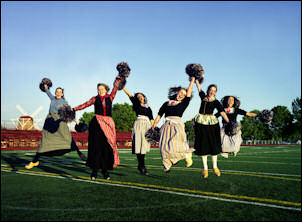
René found Orange City by accident. On assignment for a Dutch newspaper in 2004 to photograph tractor square dancing he traveled to Iowa. His American hosts told him about Orange City, 30 miles down the road. On a Sunday afternoon they drove through the city, and noticed the orange water tower, the tulips, and the Dutch building fronts. Orange City promotes a Dutch atmosphere with incentives for building owners. "Even the local Pizza Hut has the look of an Amsterdam building, and on their bathroom doors it says 'Dames' and 'Heren'".

Photo project Promising Land

Over the years, René has been back to Orange City a dozen times, and always found a warm welcome in the community. "We've done some crazy things. One Sunday morning I organized a zombie photo-shoot with the local funeral home; the fire brigade created smoke, and the whole town got involved."

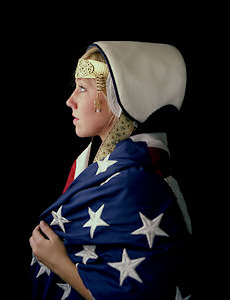
"It is such a difference compared to working in New York City, with its press secretaries, PR agencies, etc. Everyone is so approachable! One day, I wanted to shoot a photograph of a girl in a Dutch costume, carrying an American flag. I didn't have an American flag and so I approached City Hall to see if I could borrow one. They said it was time for them to replace their flag anyway, so right there and then, they let me have the flag that was flying outside".

René speaks highly of the community in Orange City. “What I take away from my Orange City experience is that people went out of their way to help me making my pictures. During all these years there was a mutual enthusiasm and respect, this is what made this project special and I think it shows in the pictures”.

René shoots his photographs on medium format film using a Pentax camera. The project began with a a series of portraits in the tradition of the Dutch master painters, drawing upon their use of soft light and stark, black backgrounds. This was followed by a series of landscapes in which René took his subjects out of the studio environment and put them, still in costume, straight into modern life, smack in the middle of American culture. The result are beautiful and often funny photographs.
The multi-year project is now coming to an end, and René is raising funds for the book's publication through a Kickstarter, an online service. René is hoping to be able to publish the 96-page book in time to present at the 2011 Orange City Tulip Festival.

Promising Land
René Clement
Kickstarter website for Promising Land
Rene Clement.com

Topic
By admin , 7 September 2010

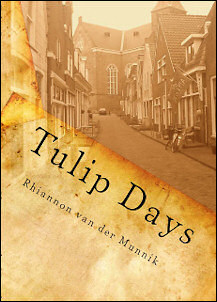
Tulip Days.Tulip Days is a new novel by Rhiannon van der Munnik about an American woman who moves to the Netherlands to follow her love. Her life experiences and complicated relationships make for an intriguing read, and it's interesting to read how a poet from California experiences life in Harlingen, Friesland.

A Californian woman in Friesland

Mrs. van der Munnik, who herself is from California, explains that while the storyline and relationships in the book are purely fictional, the descriptions of an American living in the Netherlands are autobiographic: "About 8 years ago I lived in the Netherlands for a year, in Harlingen, Friesland. I'm from California, so the weather was quite a bit different. There's also a difference in culture, in mindset; life in the Netherlands is a little bit slower. I used these aspects in my book."

Rhiannon currently lives in the Sacramento area with her Dutch husband. Earlier this year she published her first collection of poetry, titled Hindsight Hymns and her background as a poet is reflected in the language she uses: "We carried on like two ceramic figurines in a snow globe. [....] Nobody else mattered when we locked our apartment door behind us. We simply tried our best to catch the specks of glitter on our tongues, and to avoid the shaking up of our sphere whenever we could.”

Dutch details

The book has many details that are instantly recognizable for Dutch-Americans: the mother who hangs the bed sheets outside to dry, the excellent coffee, and other typical Dutch-American experiences such as when Christiaan, one of the main characters, returns to the Netherlands and meets his mother: "‘Je bent wel aangekomen zeg', she said, with a laugh". Van der Munnik: "yeah, the ‘blunt thing' -- Dutch people can be quite direct in what they say".

The book has been a few years in the making. "I started working on the book in Holland, but I put the project on the back-burner for several years."

Various meals are described in the book, and they often are not very appetizing. When asked, Van der Munnik acknowledges that this part is somewhat autobiographic: "I did not always enjoy the Dutch meals; they were a little bland at times and I didn't want to be the only one at the table adding butter to my rice! But I do like Dutch krokets, pancakes and poffertjes. ".

Her husband's love for paprika chips appears in the book in the Saturday night ritual of sitting on the couch with paprika chips and a movie.

The book's back cover:

Seraphina, a twenty four year old poet from California, has never doubted that she loves her Dutch husband, or that she will spend the rest of her life with him. But when his job brings them to the Netherlands, an introduction to her husband's childhood friend (Jakob, a charming violinist) leads to a series of events which force Seraphina to ask herself if the life she has is truly the one she wants. Spanning nearly a decade, Tulip Days delves into the aftermath of her decision, and paints a carefully constructed portrait of a young woman attempting to bloom amidst the raw and foreign landscape of Holland.

Mrs. van der Munnik provided Dutch in America.com with a copy of her book which is available at Amazon.com. She is now working on her next women's fiction novel.

Tulip Days
Author: Rhiannon van der Munnik
ISBN 978-14-528764-1-2
290 pages, paperback, 9 x 6 inches.
http://tulipdays.rhiannonvandermunnik.com

Topic
By admin , 12 July 2010

Here is a selection of articles and videos about Dutch fans in the USA watching the final World Cup game between Spain and the Netherlands.

  • New York Times, about the event by NLBorrels.com in Tonic, "...a bar in Midtown that has become a center for Dutch events. Hundreds of people crammed every square foot of the bar on Sunday, craning their necks to watch the action on the wall-to-wall overhead screens. There were orange hats, orange shirts, orange balloons, and giant soccer balls suspended in nets from the ceiling"
  • Royal Netherlands Embassy in Washington, DC, slideshow
  • San Francisco Chronicle: "The traffic-cone orange of Dutch fans dominated the crowd gathered in front of two giant screens across from City Hall, with red Spanish jerseys sprinkled in between."
  • KUSI News: World Cup finals at Shakespeare Pub & Grille, San Diego
  • Washington Post, about Mackey's Pub: "At the pub in Northwest, more than 250 yelling, foot-stomping, orange-wearing fans crammed in to cheer on their beloved Dutch. They wrapped themselves in flags, blared vuvuzelas and bit their nails. They cheered every movement toward Spain's goal and screamed obscenities at every foul, the volume increasing with each newly poured cup of beer".
  • ABC 15.com: "Hundreds of orange clad fans gathered Sunday in Scottsdale to cheer on the Netherlands in the World Cup finale."
Topic