 Guest author Merel van Beeren wrote about Dutch entrepreneurs in New York city. Merel is a Dutch graduate student at New York University in the Global Journalism program.
Over 400 years ago the Dutch founded New Amsterdam, laying the foundation for what is now the most famous city in the world. The island of Manhattan “would become the first multi-ethnic, upwardly mobile society on America’s shores,” as Russell Shorto wrote in ‘The Island at the Center of the World.’ A little over fifty years later, in 1664, the British took over reign of the city, renaming it New York. But the Dutch haven’t disappeared.
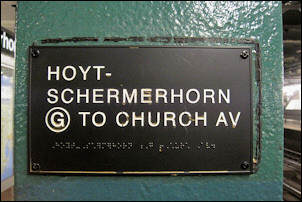
Apart from historical landmarks, street names and metro stops no American can properly pronounce like Hoyt-Schermerhorn, the Dutch continue to be a part of the city – especially through business, in keeping with their history of worldwide trade. New York City is host to over 2,800 internationally owned businesses. According to the 2008 International Business Directory – a project of the Office of the Mayor and the United Nations – 91 of those are of Dutch origin. That makes 3.25 percent which, for a country of only 17 million inhabitants out of a world population of almost 6.8 billion, is a considerable proportion.
Not only have large organizations like Philips Electronics or Ovid Technologies made the move to the United States’ international business capital, but small businesses have started international branches or have built companies from scratch.
The most European city in the country
What most Dutch people find attractive about New York is the success of the multicultural society, muses Ad Hereijgers, an urban planner turned bikeshop owner. It is something that has been on the decline in the Netherlands, he says. “Combine that with the friendliness and optimism of the average New Yorker, and you have a city that offers a great living situation.”
New York is the American anomaly, some people say. It is the most European city in the country, but it offers more than Europe can – it is the place where pioneers are celebrated, where opportunities abound, and where you can reach the ultimate levels.
Playing in the Champions League
 “Working in New York means playing in the Champions League,” remarks Stef Gans, the CEO of marketing consultancy firm EffectiveBrands, referring to the elite European soccer league. “In the Netherlands, that’s just not an option. And that applies to basically all commercial branches in the world of business.”
Hereijgers, who had been coming to the city since the early 1980s for his work as an urban planner, had long been involved with the real estate business when the economic crisis hit. Instead of being a negative experience, for Hereijgers the crisis actually helped free up some time for a new enterprise: Rolling Orange, a store selling Dutch commuter bikes in Brooklyn.
“We have a simple business plan, but not without risks,” he said. Combining the store with his work as an urban planner offers some security. “To me, the bikes are also a means of communication. They are a way to touch upon themes within urban planning, to talk about the city’s issues that need to be addressed.”
The store also has a mission: making bicycles into a way to get around, instead of just part of a hobby. “It’s not just a store, it’s a sort of lifestyle,” Hereijgers said. By making the store and the process of building the bikes accessible to the public, Rolling Orange hopes to get more and more New Yorkers to make bicycles their preferred choice of transportation – as is so common in the Netherlands.
“A sober, realistic way of thinking is part of the Dutch DNA,” Hereijgers believes. “That way of thinking has brought us a long way, including outside our borders, and especially in this city.”
New York as a key to reach the American architectural community
For Trespa Design Centre, originally from the Dutch town of Weert, New York was a key way to reach the American architectural community. The company mainly manufactures paneling for building façades, and the New York location also offers space to architectural and fashion events, for which their Chelsea location is ideal.
“We were lucky enough to already have some contacts,” said Todd Kimmel, business development manager for Trespa, about starting up in New York. “For an international business to come in, a lot of success lies in the networking and the relationships that you had prior to coming in.”
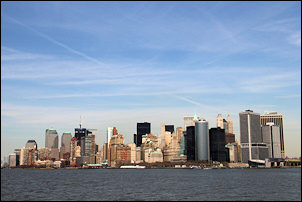 The New York branch opened in 2008, but its expertise didn’t suffer from the economic crisis – where companies mostly opt out of constructing new offices during a crisis, they might spruce up the exterior of the existing building instead.
The crisis was less easy on EffectiveBrands. The business was created in Amsterdam but expanded to New York six months after its launch to have more access to international markets. The effects of the crisis were strong in its field – advertising and marketing – but very different from those in the Netherlands.
“A remarkable difference between here and the Netherlands is that here, when it goes bad, it goes extremely bad, but it bounces back just as fast.” Where the Dutch continue to struggle with the consequences of the crisis, Americans are already celebrating a new period of success, Gans said.
New York City's red tape jungle
Although Agentschap NL, a Dutch government agency that advises on foreign business start-ups, claims that “foreign investors face no particular obstacles in establishing companies in the United States,” small entrepreneurs do feel it is not as simple as it is for Americans.
A Dutch architect I spoke to who moved to New York several years ago, found that practicing his craft in the city is not easy. The process of becoming a licensed architect can take years and it seems like American architects are favored – entrepreneurs from other Western countries who can offer highly qualified work pose a threat to their American colleagues. Diplomas and licenses from foreign educational institutions are valued far below their American counterparts, leading to a significant delay before foreign entrepreneurs can begin practicing their craft.
An article in Fenedexpress, a Dutch professional magazine for businesses looking to go global, speaks of the overwhelming amount of rules and regulations for new companies. In particular the different levels of government– local, state, and federal – are confusing to foreigners, and are often referred to as the “red tape jungle”. The process has only become trickier in the last decade.
“Since 9/11, it hasn’t been easy for foreigners to come in and build a business,” Gans said. “There is a lot of paperwork that you have to go to prove that you’re not affiliated with any sort of terrorism. It is harder today than it has ever been.” And it’s not just the paperwork.
“America is a country where you have to prove yourself in a short of period of time,” said Jeroen Bours. He is the CEO of Darling, an advertising agency, and the man who thought up Mastercard’s Priceless campaign. The pressure to perform is very strong.
“Starting your own business is something that everyone can do," Bours says. "Doesn’t matter who you are, what languages you have, or who you know. Everyone can easily start up a business tomorrow.” The ease with which you can start something, he adds, is only matched by the ease with which you can then fail, just as hard.
But Bours is convinced that the combination of a Dutch work-ethic and the pressure that New York puts on its citizens can also lead to great businesses. “If you want to work as hard as you can, you will make it. Period.”
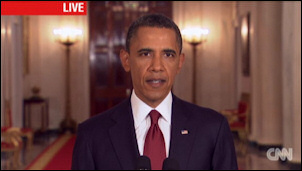 Wow. Osama bin Laden dead, what a huge moment.
 I had a quiet weekend. I've had a cold for a week and I used this weekend to recover. Today I felt a lot better than yesterday.
 A red carpet opening
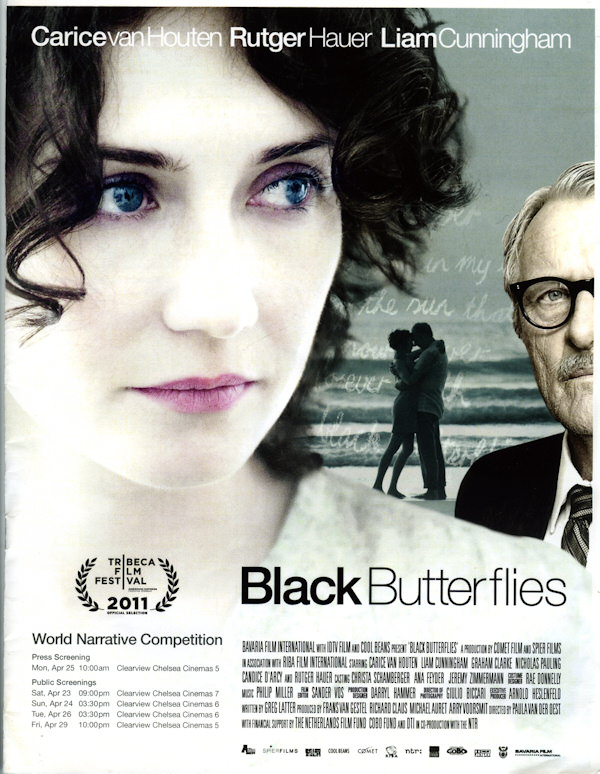
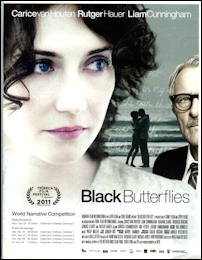 In the beginning of the film she is saved from drowning by the writer Jack Cope (not an actual event). A tempestuous relationship ensues, but it does not last. He cannot accept her other dalliances and decides to go away for a few months to be with his sons. She feels terribly rejected and ends her pregnancy, which he doesn’t know about, in a dirty back ally room in a black township. Still, Jack Cope remains her anchor. She continues to call on him every time she is in trouble and each time he comes to her rescue.
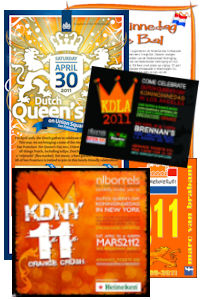 April 30th is Queen's Day, a national holiday in the Netherlands to celebrate the Queen's Birthday, and there are over 30 celebrations for orange clad Dutch expats and immigrants throughout the United States.
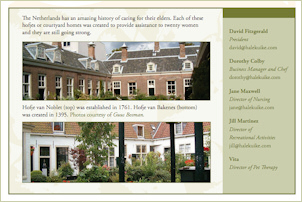 Two photographs that I took in Haarlem, the Netherlands, years ago are now used in a newsletter.