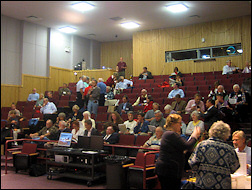
 Last weekend was the 2009 Rensselaerswijck Seminar in Albany, NY. This year the annual Seminar had a two-day program with an opening on Thursday evening with Russell Shorto and speakers on Friday and Saturday.
The seminar took place in New York State Museum's Carole Huxley Theatre. Your correspondent had the opportunity to attend the Saturday session with a diverse group of attendees ranging from professional historians to interested people from all walks of life. According to Charles Wendell PhD, President and Chairman of the New Netherland Institute, the complete registration for the two days of the seminar was 180, one of the best numbers in the history of the event.
The program started at 9.00 A.M. and the friendly atmosphere was set with a birthday recognition of Jippe Hiemstra, chairman of the Institute’s 2009 Committee. In the introductory words Dr. Wendell led a rousing cheer for the Van Voorhees family who organized their 5-yearly event to coincide with the Seminar, followed by recognition of the many attending societies and organizations.
No 'Holland on the Hudson'
The first speaker was Jan Folkerts MA, general manager of the municipality of Littenseradiel in Friesland and a New Netherland researcher.
Until the 1980 most researchers considered the Netherlands to be homogeneous, but in reality there are significant differences culturally, politically and economically between the various regions in the Netherlands. When thinking about the Dutch Republic in the 17th century the province of Holland is often considered to be representative of the whole Republic, since that is where the power center of the country was. However, colonists and farmers mainly came from other provinces as Mr. Folkers convincingly showed using various charts and graphs.
"Whatever New Netherland might have been, it was certainly not 'Holland on the Hudson'".
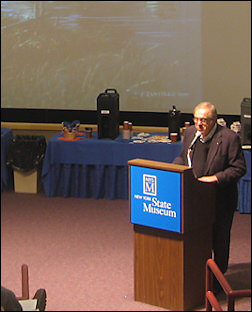 Charles Gehrling: "We're still finding stuff!"
Charles Gehring, PhD, director of the New Netherlands Project, spoke next. He talked about the origin of the sources that the NNP is translating, and some of the events that impact caused documents to disappear such as a 1674 reorganization of the WIC and a fire in 1911.
About the documents: "Some of them are still out there -- those that weren't boiled up and made into new paper. We're still finding stuff!"
Dr. Gehrling's talk was informative and very entertaining. Mr. van Slichterhorst, the main subject of the talk, had a hard time dealing with the Indians according to a related lawsuit filed in the Netherlands. Negotiating with the Indians was expensive to him personally: large amounts of gifts, food and drinks were provided. "So, this would be an early example of a protection racket". Dr. Gehrling mentioned an interesting project by the Universiteit van Leiden, http://www.brievenalsbuit.nl.
Henry Hoff, the editor of The New England Historical and Genealogical Register, spoke about researching family history in New York and New Jersey. His hand-out contains many useful links to genealogy research.
After the break Dr. Starna introduced Dr. James W. Bradley as the recipient of the annual Hendricks Award for his book Before Albany.
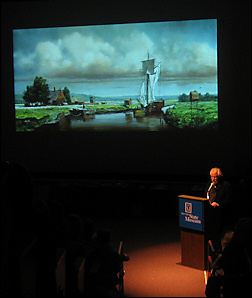 Len Tantillo
Len Tantillo showed many of his beautiful works and spoke about the research that went into creating these paintings. He described how archeology and the translated documents work together, for example to show that people in Fort Orange lived a wealthy live, not all that differently from their peers in patria, the Dutch Republic.
To paint canoes Mr. Tantillo did research in Canada on how to make canoes (using elm) and he worked with the Scheepsvaartmuseum in Amsterdam to learn what a Dutch bark looked like.
Martha D. Shattuck PhD, editor for the New Netherland Project, wrapped up the presentations with a talk about Rensselaerswijck.
New Netherland dinner
The evening reception and dinner was in the Hampton Inn and Suites and Indonesian food was provided by Yono's. Appetizers included krupuk with peanut sauce and Indonesian meatballs -- a nice touch for a partially Dutch crowd, since Indonesian food is not common in the United States.
A special Half Moon daalder coin was presented to everyone at the dinner; a great present by Dr. Andrew Hendricks, Chairman of the New Netherland Museum.
William (Chip) Reynolds, Director of New Netherland Museum, spoke about the work done with the Half Moon ship that he is captain of. Technical problems with the projector did not stop him from conveying what kind of preparation and guts it took Henry Hudson to cross the ocean and explore the Hudson river. Dr. C. Carl Pegels, Professor Emeritus, SUNY at Buffalo, NY. received the Alice P. Kenney Memorial Award for his excellent online collection of Dutch-Americans.
After the main event smaller groups stayed until late in the night. In the words of the Dr. Wendell: "We consider the entire event to have been a great success" -- we agree.
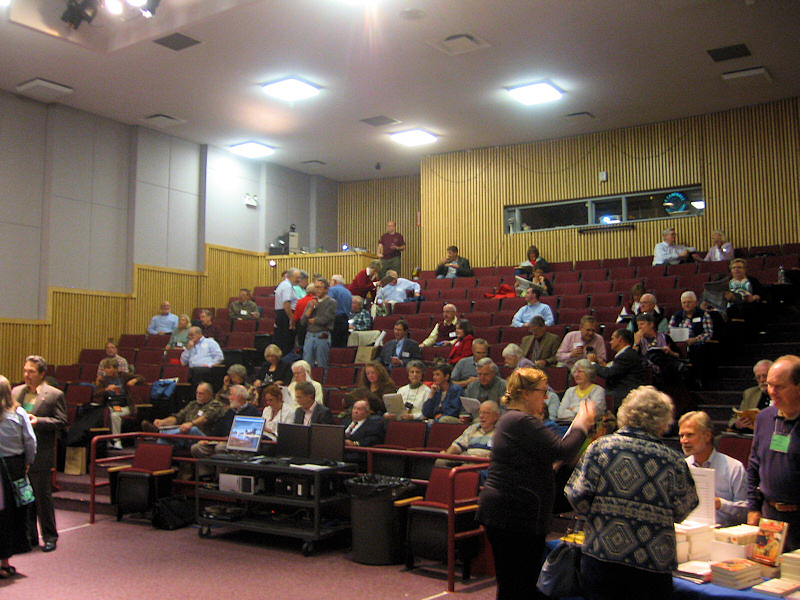
The audience in New York State Museum’s Carole Huxley Theatre.
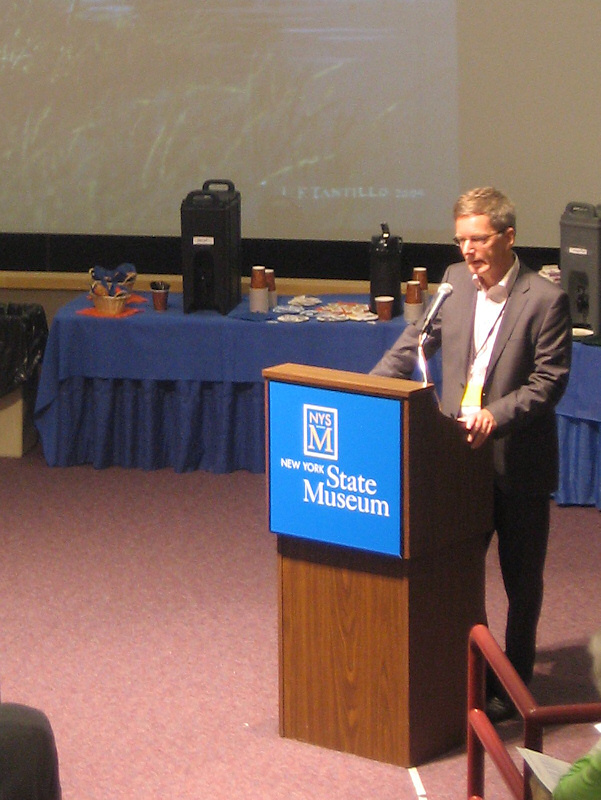
Jan Folkers: "Regional Patterns in Dutch-American Culture"
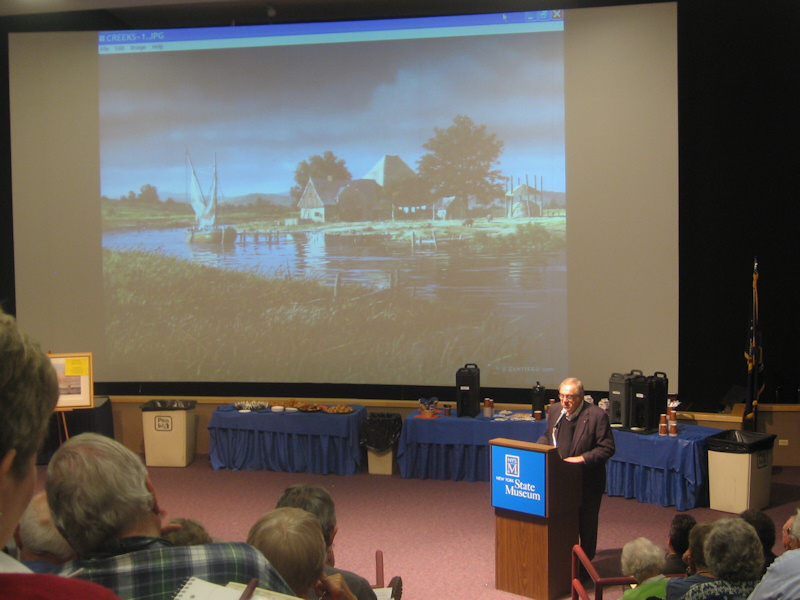
Charles Gehrling: "Brant van Slichtenhorst’s Indian Grievances: Mohawks and Mahicans at Rensselaerswijck"
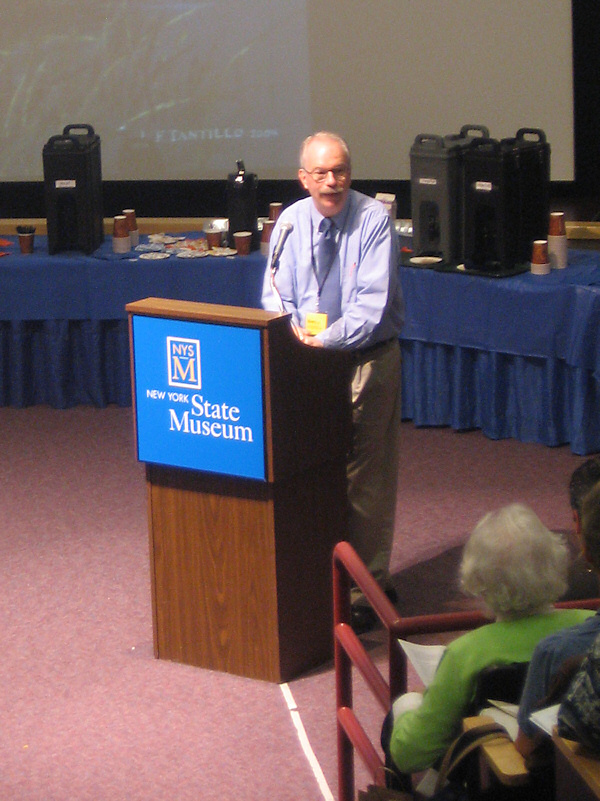
Henry Hoff: "Researching Dutch Families in New York and New Jersey"
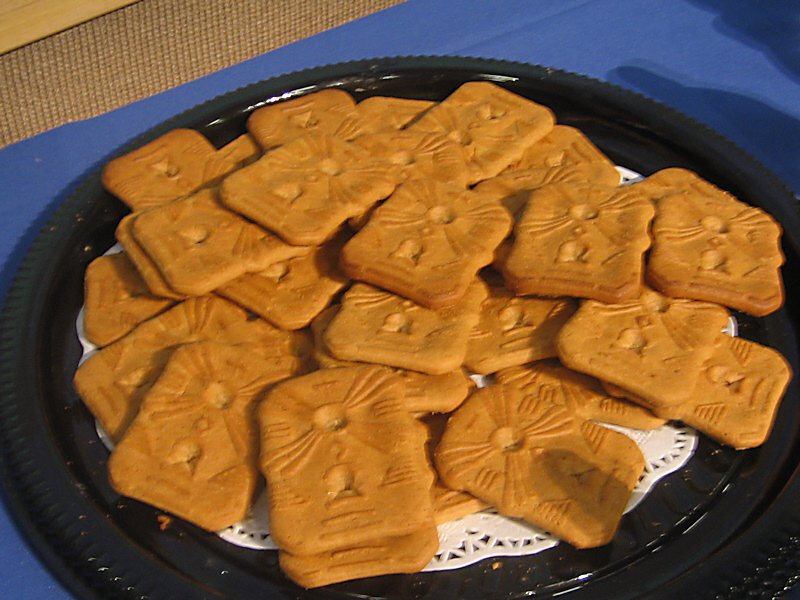
Appropriate speculaas cookies during the break.
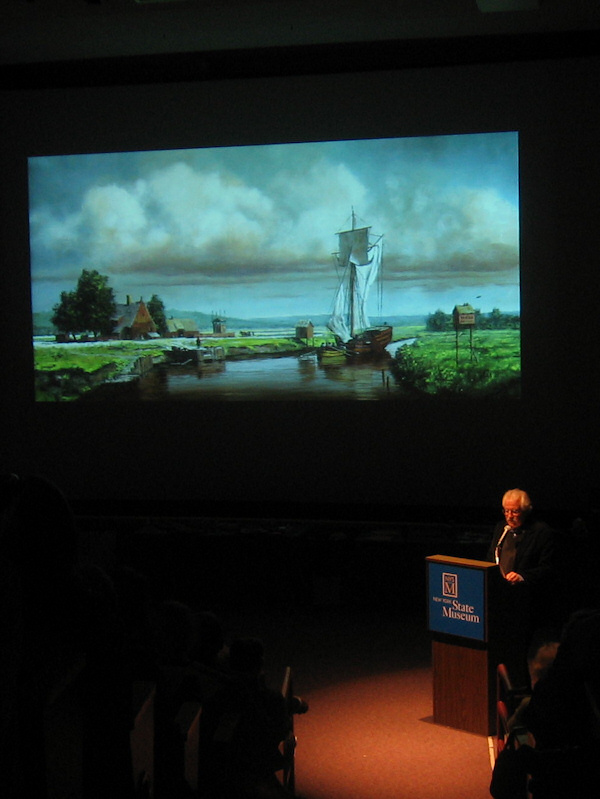
Len Tantillo. In the background a projection of one of his works.
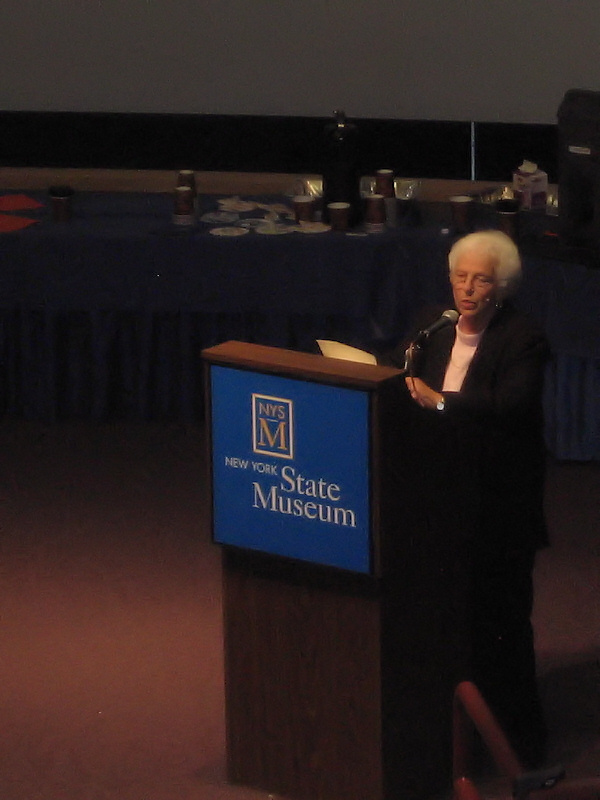
Martha Shattuck, PhD: "From Dutch Patroonship to English Manor"
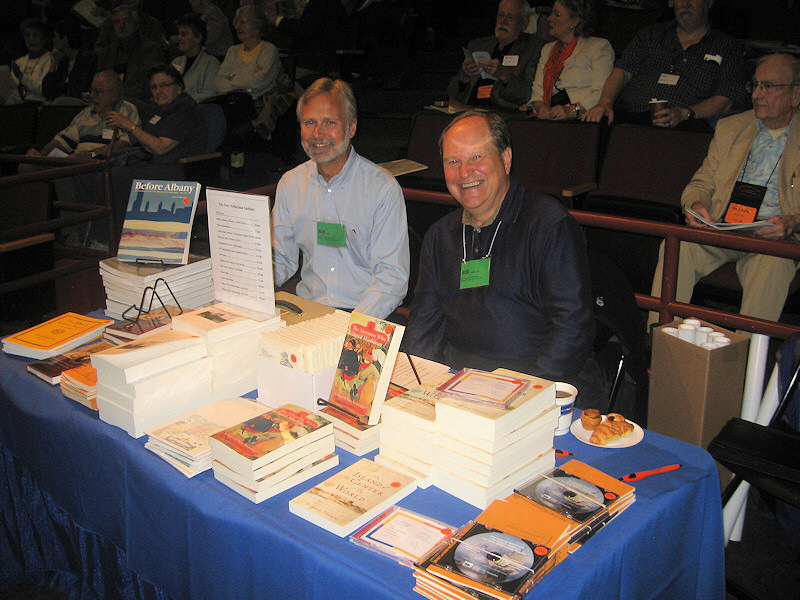
Board members selling books.
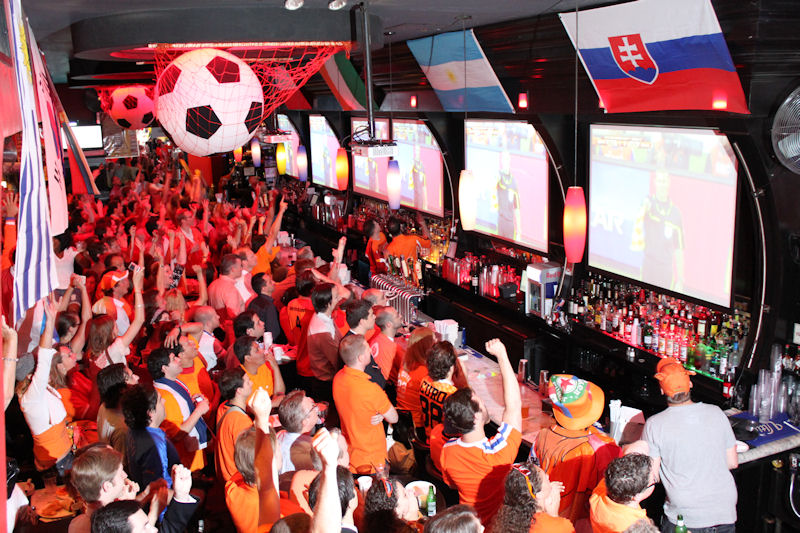
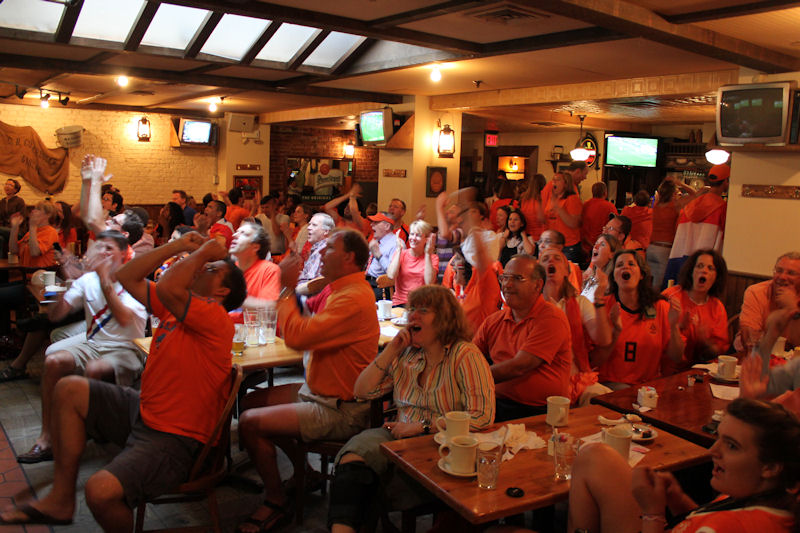
 For the first time since 1978 the Dutch soccer team has made it to the finals at the FIFA World Cup. The Dutch have never won the title... will Sunday be different?
 East Coast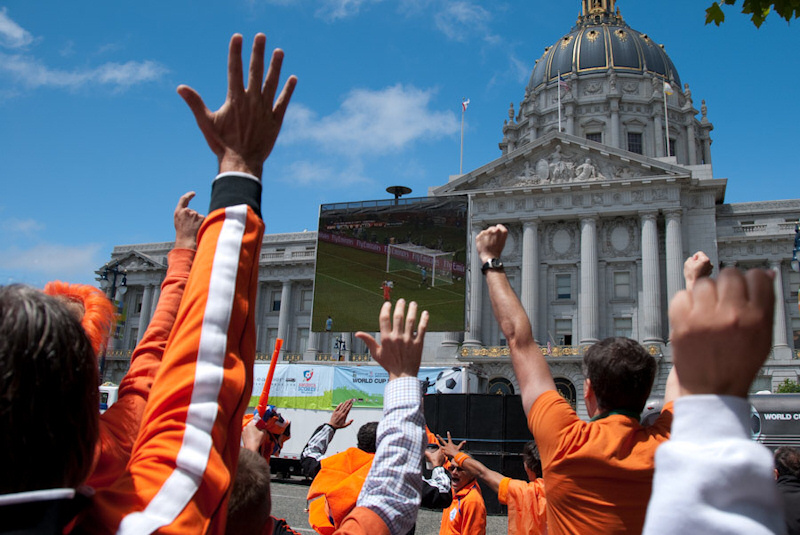
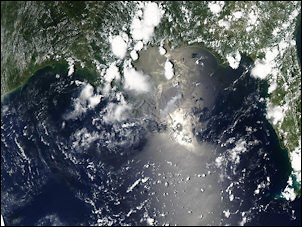 The Dutch government and Dutch businesses are assisting with the cleanup of the oil spill in the Gulf of Mexico. After the spill began the Dutch offered several oil skimming arms. These sweeping arms, created by
  The New Orleans newspaper Times-Picayune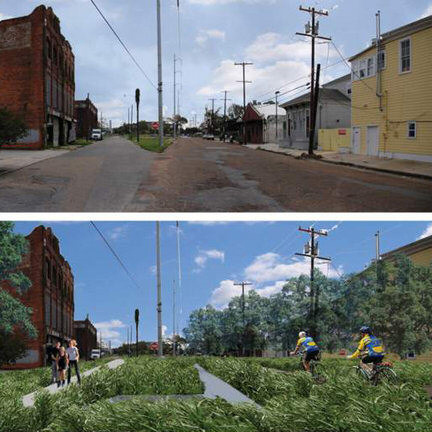
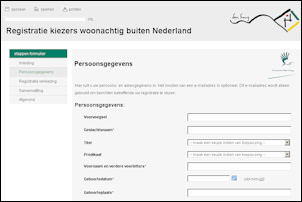 The registration form for Dutch citizens abroad who want to participate in the upcoming parliamentary elections in the Netherlands is
  A co-founder of