Bulgaria

By admin , 12 July 2012

Tonight I went to my second meetup of the Bulgarian student group here in Arlington. We were only three people so it was a great opportunity to talk.

Most students of Bulgarian here are working for the government, so tonight I added посолство (embassy) to my repertoire. In the next 4 weeks I probably won't go to the meetup, so it's a bit of a summer break now.

Topic
By Guus , 5 July 2012

Tonight I attended my first meeting of the Bulgarian Meetup group in Arlington. It was great -- we were 5 people and spent 90 minutes talking in Bulgarian. There was one native speaker, somebody who had been in Bulgaria with the Peace Corps 10 years ago and two who are leaving for Bulgaria in a few weeks.

The location was very convenient; it was in the coffee shop "Euro Market" in our apartment building. Next week will be the last meetup before the summer.

Topic
By admin , 19 June 2011

Milan and Nadia, Sasha's parents, visited us for a month and we had a great time. We speak Bulgarian with each other, so this was a great opportunity to improve my vocabulary. It's easier learning vocabulary from conversations, since there is more context to remember words by.

For example, I learned the word блато (swamp, marsh) while we were on our way to Wilmington with Irena and we drove through the swamps. лепя and кантар came up when making bread with Nadia, знак and спирачка when talking about driving with Milan. I tend to specialize in my vocabulary... I'm really good in talking about recipes and cooking now.

For my French studies I started using a tool called Anki to maintain my vocabulary. It's spaced learning system that keeps track of which cards you find easy or hard, and repeats them appropriately. It also provides various charts and metrics. A couple of months ago I converted the words from my home-made Bulgarian vocabulary program into an Anki deck. I've added 210 new words to the system while Milan and Nadia were visiting us, so an average of 7 new words per day.

Here are some statistics:

Deck created: 5.5 months ago
Total number of cards: 2471
Total number of facts: 1240

Card Maturity
Mature cards: 2188 (88.5%)
Young cards: 249 (10.1%)
Unseen cards: 34 (1.4%)
Average interval: 77.4 days

Correct Answers
Mature cards: 98.7% (858 of 869)
Young cards: 76.8% (6611 of 8603)
First-seen cards: 73.3% (1791 of 2445)

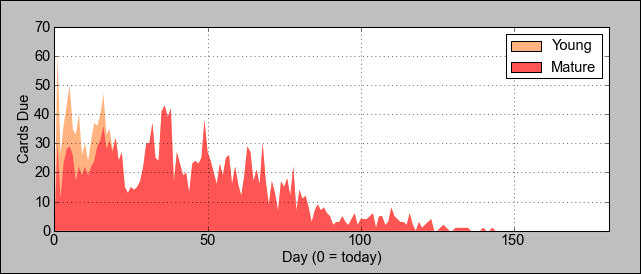
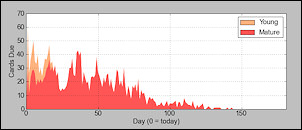
How many cards will due in the next 6 months. Younger cards will be due much sooner than 'mature' cards.

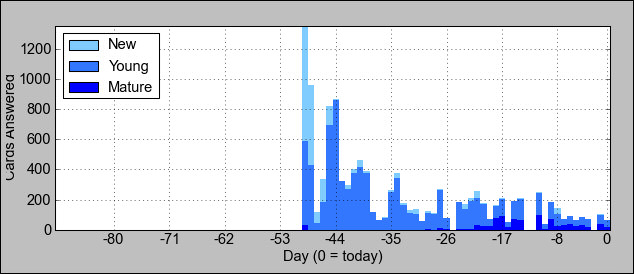
Amount of repetitions in the previous 90 days. Indicates how often I've studied my words.

Topic
By Guus , 29 December 2010

Surmichki means "small stuffed leaves", and they are delicious packages of rice wrapped in grape or cabbage leaves. In Cyrillic, сърмички.

There are endless ways to prepare the stuffing for surmichki. This is a family recipe; it's vegetarian and can thus be used for a Bulgarian Christmas Eve dinner (Бъдни Вечер).

Where to find the ingredients

Grape leaves are pretty easy to find in United States; many grocery stores carry them. Cabbage leaves are harder to locate. The cabbage leaves have undergone a sauer-kraut like process to make them tender and sauer. We found them in Food World in Durham, NC, and this was actually the first time we saw them outside Bulgaria. This stuffing works equally well for both types.

One other thing to keep in mind: one of the herbs in the stuffing is very hard to find in the States. It's called гьозум or джоджен, and is related to what's known as spearmint in the United States. However, spearmint is more minty in taste. If you like minty, then you can use spearmint. Otherwise I recommend to experiment and use your own herbs. In order of descending Bulgarian-ess: thyme, tarragon, or oregano.

Ingredients

- A can of grape leaves, or a can of cabbage leaves
- Half an onion
- 2 tablespoons oil
- 1,5 cup of rice
- Джоджен (see note above)
- Parsley (fresh parsley is of course the best, dried works okay too).
- Paprika powder
- Pinch of salt
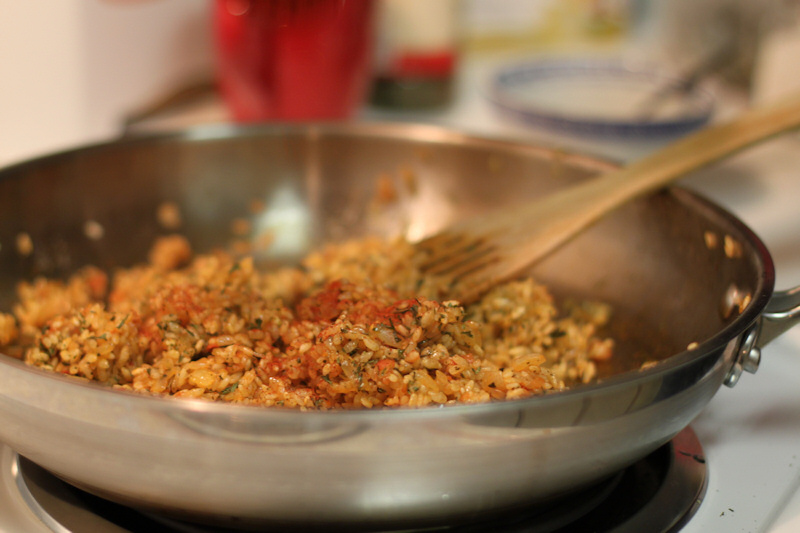
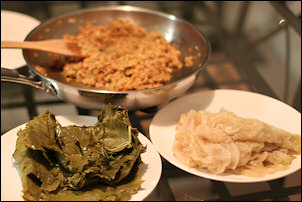
Stir fry the finely cut onion in the oil until glazed. Add 1,5 cup of rice (uncooked but washed) and the herbs (джоджен, parsley, paprika and salt). Don’t be shy with the herbs! Add a little bit of water (2 tablespoons). Once the water is gone, remove from the fire.
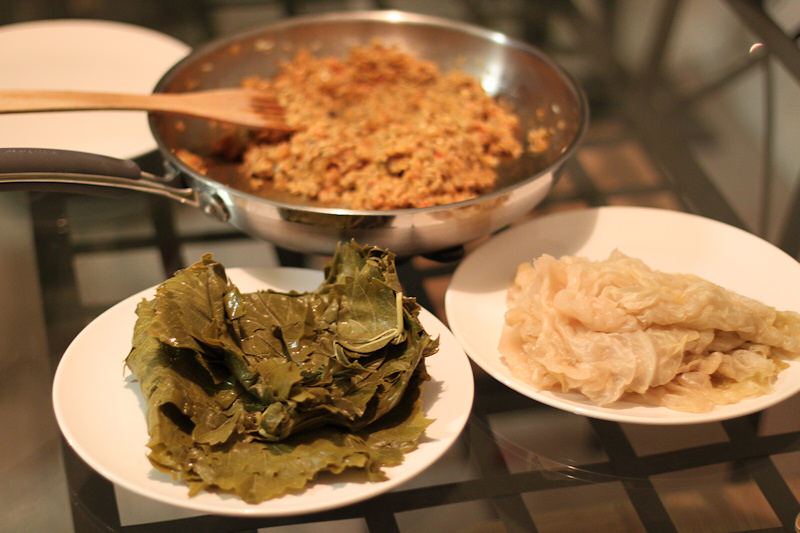
This recipe makes enough stuffing for a nice pan full with surmichki, enough for 4 people. We used a whole can of cabbage leaves, half a can of grape leaves.
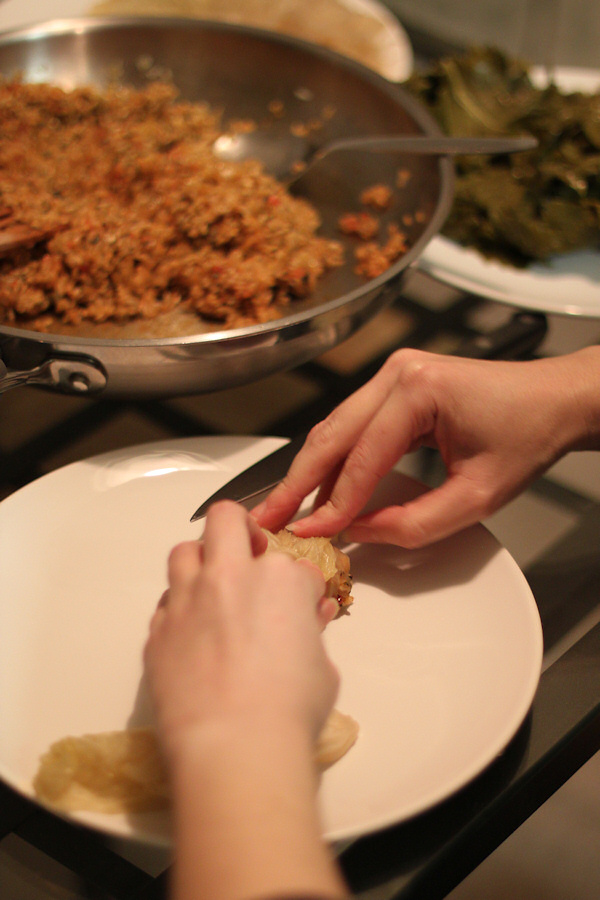
Put the mixture in the leaf, use a good tablespoon full per leaf. Place the stuffing in the middle, and roll the leaf to make a small sturdy package.
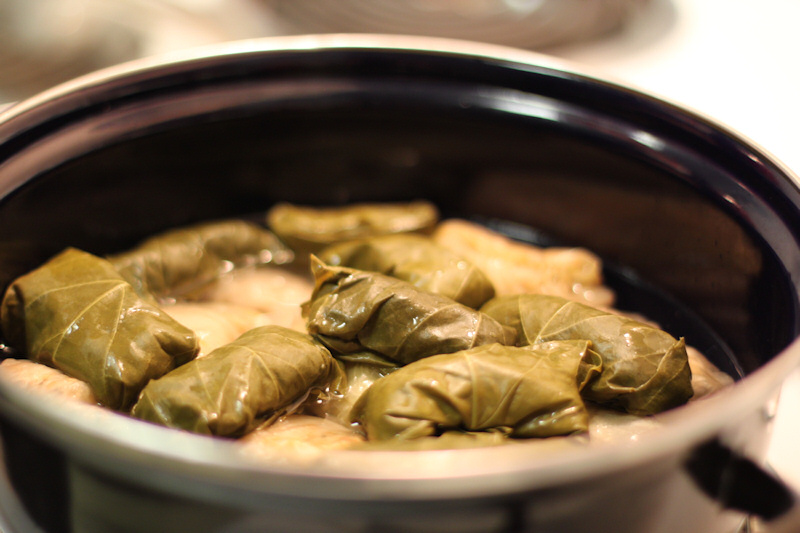
Place the surmickhi in a pan. We made both cabbage and grape leaf surmichki, and we put the cabbage ones on the bottom of the pan so they'd boil a little more. Pro tip: place a plate on top of the surmichki in the pan, so they won't expand too much.

Bring to a boil and leave them for 30 minutes on a gentle fire. You'll know when they're done when the grape leaves are tender.

Бон апетит!
Topic
By Guus , 30 October 2008

Крадецът на праскови or The Peach Thief in English, is a Bulgarian roman about the doomed relationship between a colonel's wife and a prisoner of war.

The main part of the story is told in flashbacks to the World War I in Veliko Turnovo in Bulgaria. The story itself is straightforward but it is an entertaining read. The author does a fine job of describing the atmosphere of Bulgaria in that time, and it's a beautifully written book.

By Guus , 22 October 2008

Two weeks ago in Bulgaria I decided I want to pick up Bulgarian language lessons again. I can read and understand Bulgarian reasonably well, but I want to work on my grammar and conversation skills in a more formal way.

I found a good teacher and once a week I'll have a private lesson. We're using "Bulgarian for Foreigners", an book that is very good on grammar explanations and has nice exercises. Tonight was the first lesson and it was fun and useful.

Topic
By Guus , 11 January 2007

Perushtitsa's museum.Last week I visited the museum in Perushtitsa.
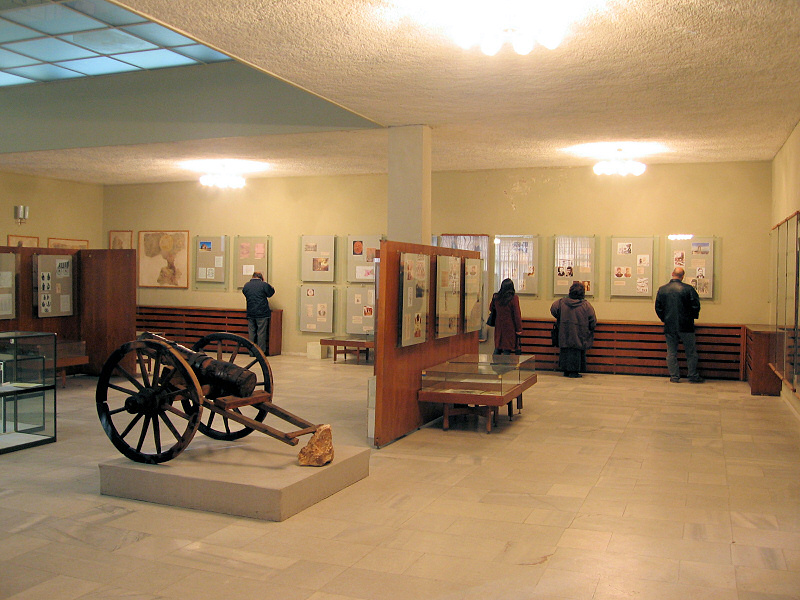
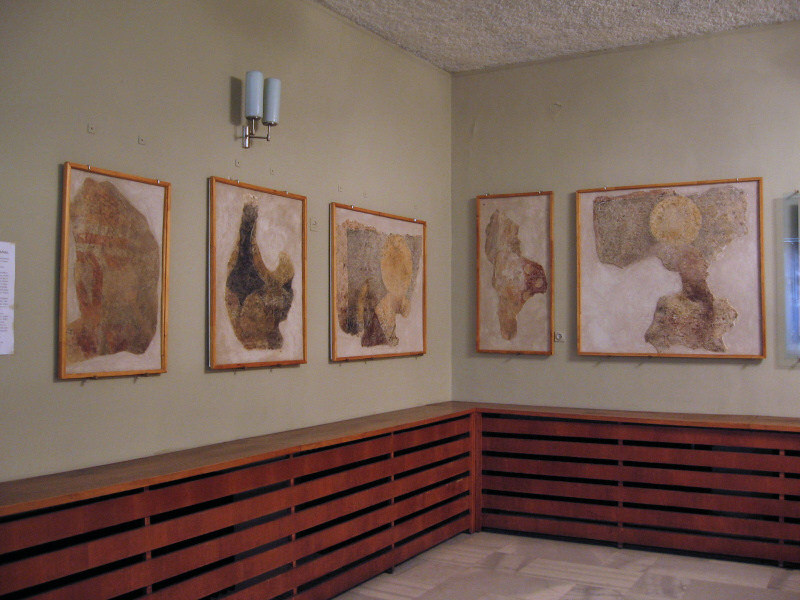
After having seen the Red Church and the church that was attacked by the Ottoman army, it was interesting to see the museum that talks about these two things.

The museum also describes the general history of the city of Perushtitsa.


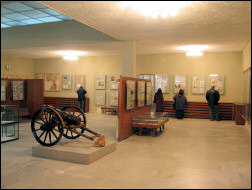
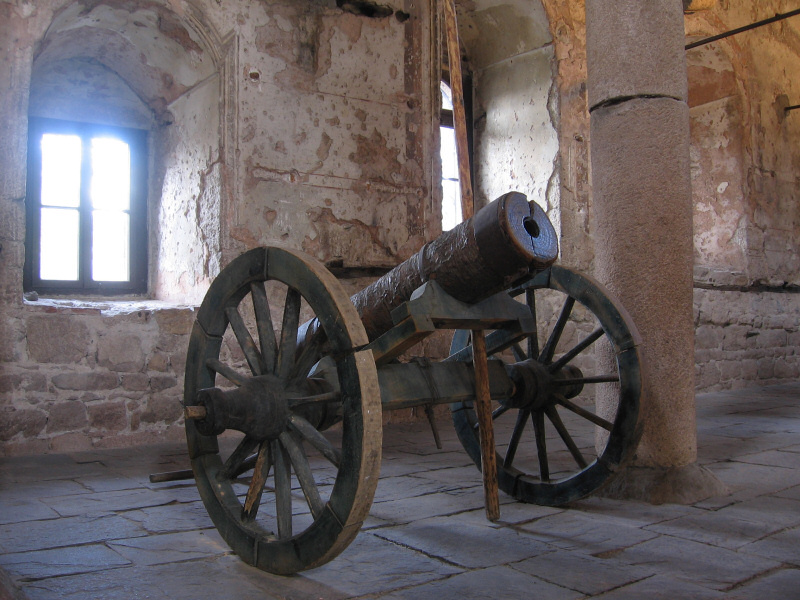
The museum in Perushtitsa. The canon is a replica on one that was used to defend the city in the late 1800's, particularly in the uprising against the Ottoman rulers.


A few of the paintings that were taken from the Red Church to preserve them.


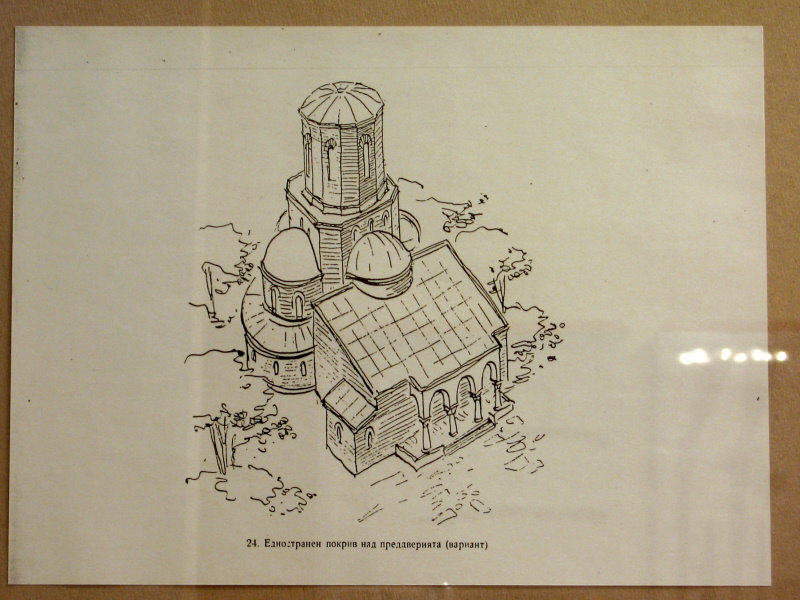
An impression of how the Red Church may have looked liked.


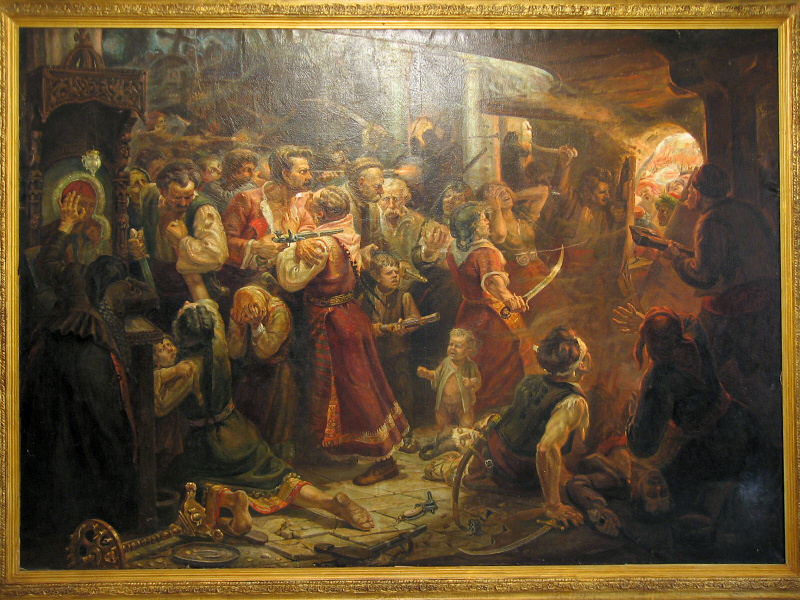
A painting of the attack on the church in Perushtitsa in April 1876.

Topic
By Guus , 9 January 2007

The city of Perushtitsa is famous throughout Bulgaria because of the bloody uprising against the Ottoman occupation that took place in April 1876.
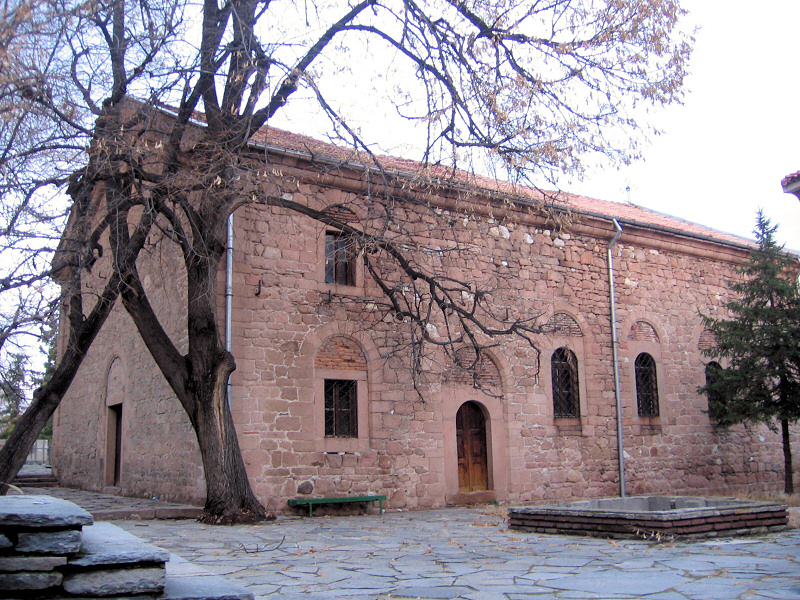
The uprising was the first step towards the liberation of Bulgaria, but the particular event in Perushtitsa ended in a dramatic murder of close to 600 people who were hiding from the Ottoman army in the church in the city.

Two years after the April uprising Bulgaria became a free country again, and the Saint Archangel Michael church was designated as a memorial.


The outside of the church. I had visited the church once before, I think in 1999 when I came to Perushtitsa for the first time.

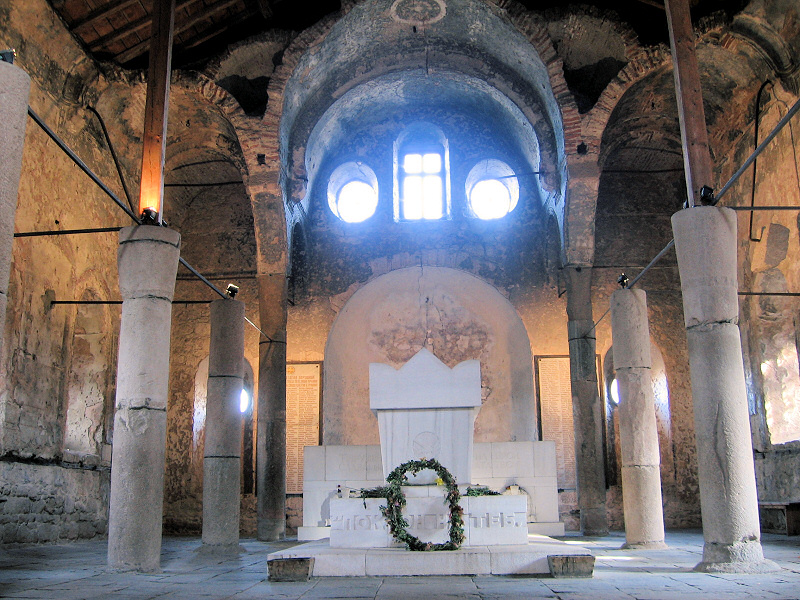
In the middle of the church is a commemorative tomb, with fragments of Ivan Vazov's poem about the events in Perushtitsa.

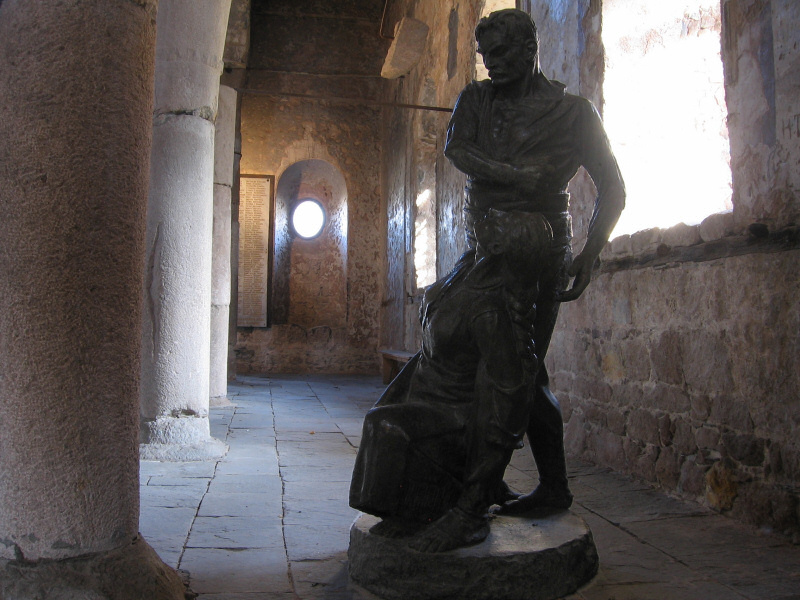
Statue of a defender of the church. In the background, next to the small round window, is list with names of the people that perished in the church.

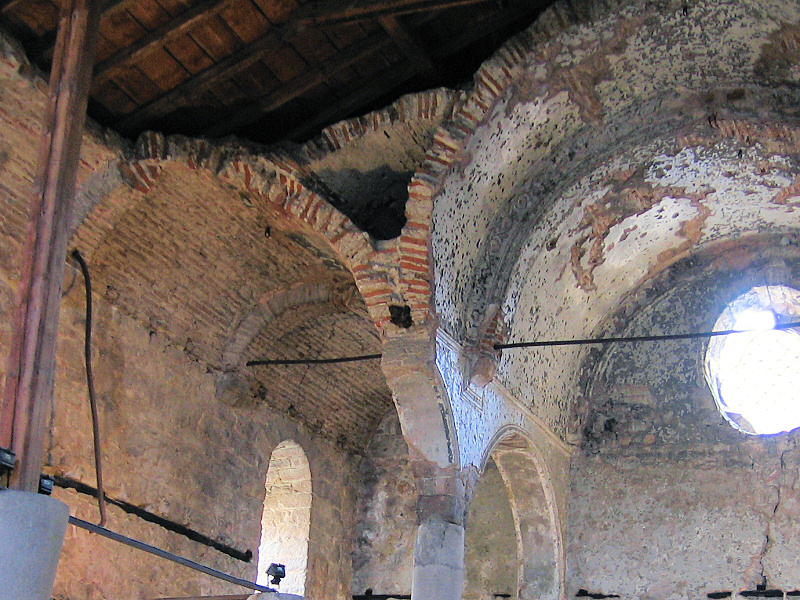
The roof of the church was destroyed by the Ottoman cannons during the attack. The survivors later added a wooden roof and decided to preserve the church to commemorate the uprising.

Topic
By Guus , 8 January 2007

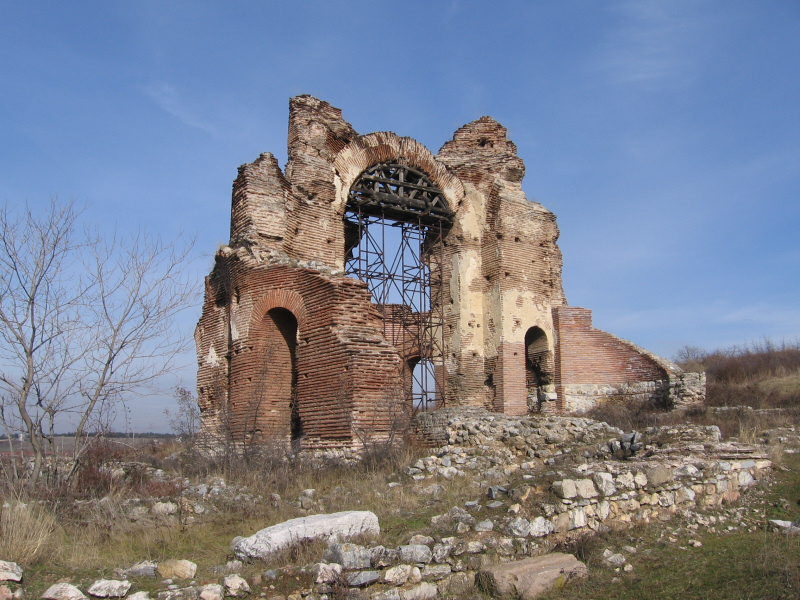
The Red Church near Perushtitsa.On Friday morning Milan, Sasha and I went to the Red Church (Червената църква), about 2 kilometers south of Perushtitsa.
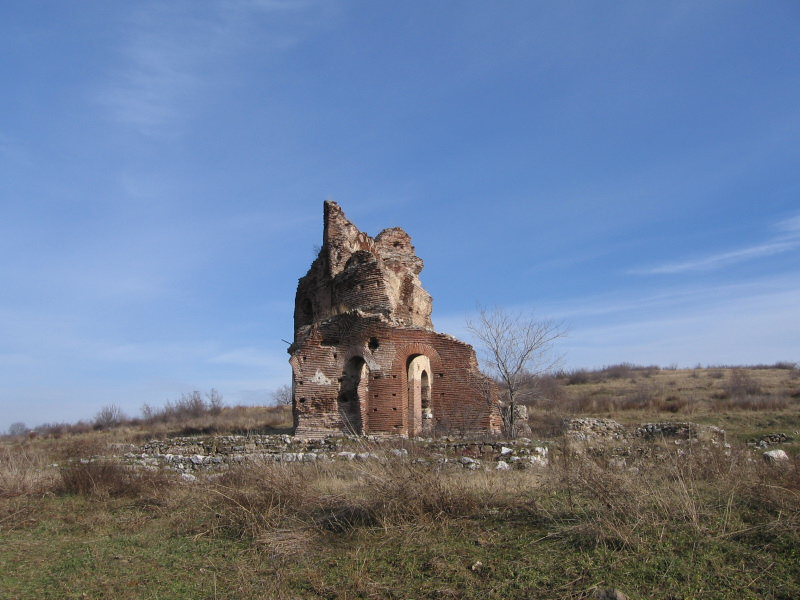
The church, dating from the 5th or 6th century, is a symbol for the city of Perushtitsa and it has been placed on UNESCO's list of world heritage sites.

I have visited Perushtitsa a number of times but somehow never went to see the ruins of the church before.


The red church, about 2 kilometers from Perushtitsa.

A part of the building is supported by a frame.


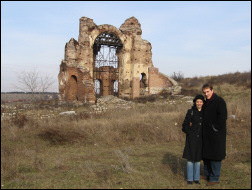
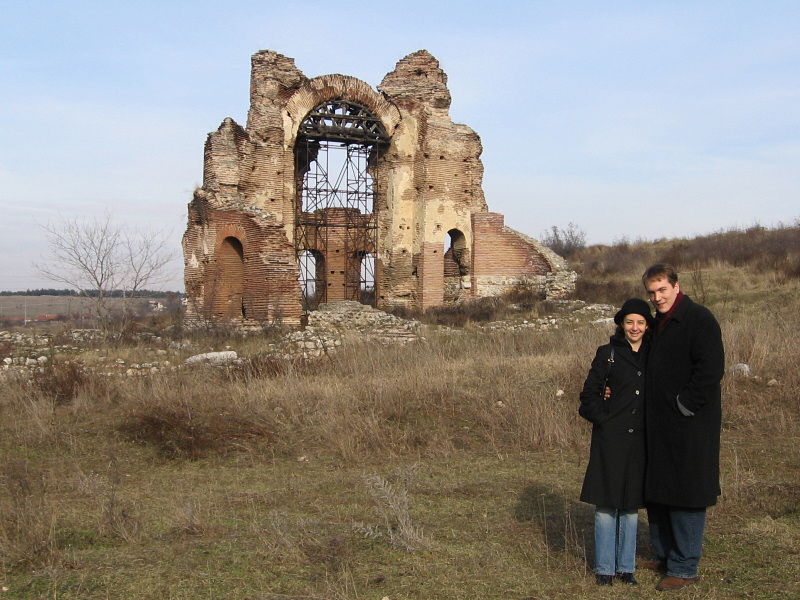
In front of Perushtitsa's Red Church.


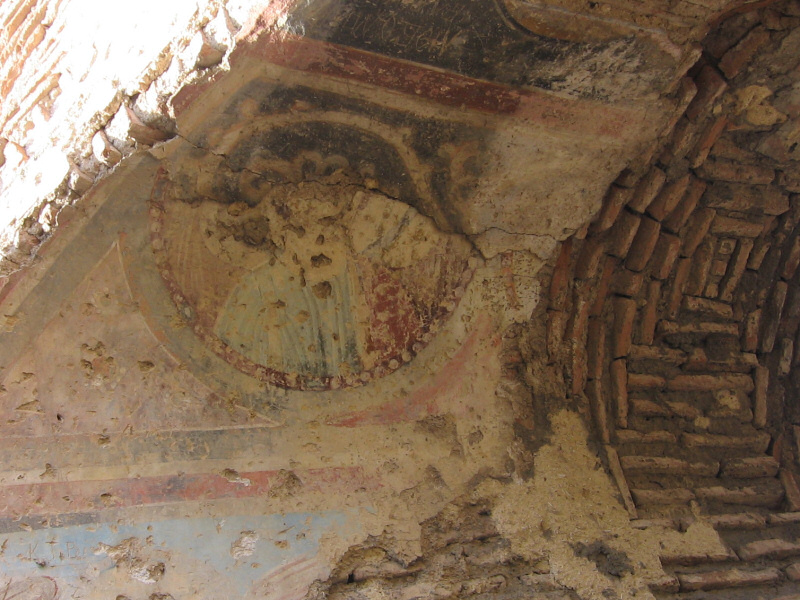
Some of the church's original frescoes are still visible. To protect them from wear and and tear by weather, many have been moved in 2003 to the History Museum in Perushtitsa.

Topic