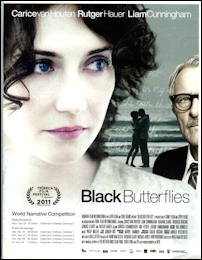
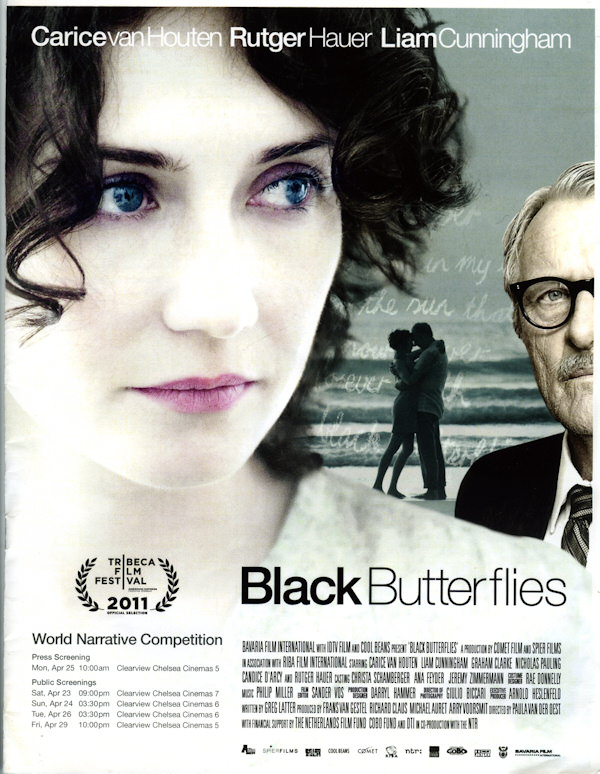
The Tribeca Film Festival is now celebrating its 10th anniversary season. Among the entries this year is Black Butterflies, a German-Dutch-South African production, directed by Oscar nominee Paula van der Oest (Zus en Zo), with an international cast headed by Dutch movie stars Carice van Houten and Rutger Hauer, and Irish actor Liam Cunningham.
Correspondent Yolanda Gerritsen went to the red carpet opening of Black Butterflies and reports to us her impressions of the event and the film.
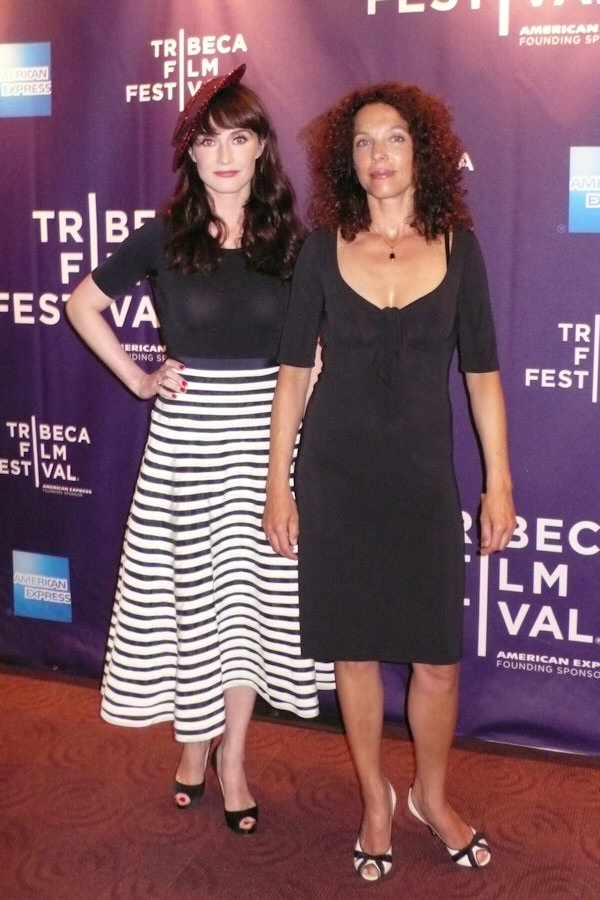
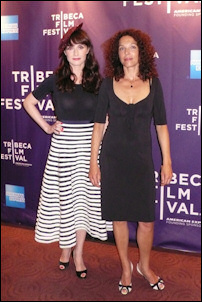 A red carpet opening
Director Paula van der Oest and actress Carice van Houten looked fabulous and ready for their close-up as they arrived at the Clearview Chelsea Cinema in Manhattan. Carice van Houten showed up in a stunning Chanel black and white striped skirt, black top, Louboutin shoes and a saucy little brown hat. Paula van der Oest had chosen a simple and elegant black dress and black and white Marc Jacobs shoes.
Van der Oest told how she came to make this movie about Ingrid Jonker, a brilliant but troubled young South African Poet who tragically committed suicide in 1965 at age 31.
The producer of an award-winning documentary on the life and poetry of Ingrid Jonker encouraged Van der Oest to make a feature film about her.
With powerful and intelligent performances by Carice van Houten as Ingrid Jonker (“I like roles I can sink my teeth into”), Rutger Hauer as her father, and Liam Cunnningham as her lover Jack Cope, director Paula van der Oest has created a haunting and heartbreaking portrait of an artist whose life was an unending emotional rollercoaster. Carice van Houten was awarded as Best Actress by the Tribeca Film Festival last night.
Ingrid Jonker
Ingrid Jonker (1933-1965) is beautiful, funny, free-spirited, spontaneous, uninhibited, a loving mother and a brilliant, irrepressible poet. But she is also very difficult, tempestuous, cruel, contradictory, child-like, and emotionally unstable. She often writes, or rather, paints her poems on the walls, a steamed-up window even, maybe to see herself reflected back to her, or maybe to know she is alive, or maybe just to leave a reminder she once existed.
She tries again and again to reach out to her father, to gain his love and respect. But Abraham Jonker is a cold, rigid, rightwing Afrikaner, Minister of Censorship in the Apartheidsregime who has no use for a daughter whose poetry, politics, and freewheeling life-style with her writer-friends embarrass him. He is emotionally unavailable to her and every time she is rebuffed and rejected by him, she goes into an emotional tailspin, drinks too much, has more affairs, even attempts suicide and ends up in a mental hospital a few times. Her need to have her father’s acceptance leaves an emptiness in her soul that can never be filled, however hard she tries. But her poetry sustains her, it is her lifeline.
 In the beginning of the film she is saved from drowning by the writer Jack Cope (not an actual event). A tempestuous relationship ensues, but it does not last. He cannot accept her other dalliances and decides to go away for a few months to be with his sons. She feels terribly rejected and ends her pregnancy, which he doesn’t know about, in a dirty back ally room in a black township. Still, Jack Cope remains her anchor. She continues to call on him every time she is in trouble and each time he comes to her rescue.
During a demonstration to protest the passbook law for blacks, a black child is shot and killed. She gives voice to her shocked reaction to this horrific act in the poem ‘The Child’, an angry, yet prophetic cry for freedom and hope. At the opening of the first session of the democratically elected South African Parliament in 1994, almost thirty years after her death, Nelson Mandela recited ‘The Child’ and praised its author as “both a poet and a South African who celebrated life in the midst of death”, thereby creating a renewed interest in Jonker’s poetry.
Die kind is nie dood nie
The director and producers chose to make this an English language film - no doubt for practical and economic reasons - so the poems are translations. It would have been wonderful, certainly for a Dutch audience, to see and hear her words in Afrikaans, the language in which they were written. Afrikaans still uses the double negative. So “The child is not dead” is really “Die kind is nie dood nie”, which makes that denial of the child’s death all the more emphatic and powerful. That said, even in the English translation, her poems are an essential presence in the film, as they tie the fragile fragments of Jonker’s life together.
One of her books wins her a trip to Europe, which turns into a deeply disappointing experience, leading to a serious breakdown in France. Her father authorizes electro shock treatments for her, which rob her of her zest for life and her ability to write. With her only lifeline gone, she is swept into a downward spiral she cannot escape from and she finally ends her despair and her life in the pounding waves of the ocean near Cape Town.
Much of the film is shot in South Africa. The incredible beauty of the scenery is in stark contrast with the tumultuous political events of that era (1960’s), which in the film simmer right under the surface but do erupt at times as a reminder of the dark reality of the Apartheid regime.
Ingrid Jonker’s love of the beach and the ocean is one of the leitmotifs in this film: carefree beach scenes alternate with shots of powerful waves crashing, churning, and pounding with overwhelming force on sand and rocks. They are a visual expression of Jonker’s inner turmoil, her uncontrollably contradictory emotions, which crash and churn inside her and ultimately lead to her self-destruction.
Black Butterflies is an engrossing film. It opened in Holland last month, but plans for a wider release are as yet unknown. It deserves to be seen. There is one last showing in the Tribeca Film Festival, tonight, Friday April 29, at 10.00 p.m. at the Clearview Chelsea Cinema, on 23rd Street, between 7th and 8th Avenues.
Black Butterflies at Tribeca Film Festival
 Guest author
  “Working in New York means playing in the Champions League,” remarks Stef Gans, the CEO of marketing consultancy firm EffectiveBrands, referring to the elite European soccer league. “In the Netherlands, that’s just not an option. And that applies to basically all commercial branches in the world of business.”
 The New York branch opened in 2008, but its expertise didn’t suffer from the economic crisis – where companies mostly opt out of constructing new offices during a crisis, they might spruce up the exterior of the existing building instead.