In the seventeenth century, Dutch merchants and traders conquered the world seas, and the lasting legacy of this period can be found in paintings, writings, and historic cities throughout the Netherlands. This wonderful new book by Donna R. Barnes and Peter G. Rose explores a fun but lesser known aspect of seventeenth-century Holland: what was it like to be a child in the Dutch Golden Age?
The book is structured around 54 paintings, prints and drawings of children's activities. After introductions by the two authors - whose backgrounds as a professor of education and as a food historian complement each other well - the paintings are discussed in eight groups: Infancy; Saint Nicholas; Celebrations and Music; Toys and Games; Animals as Pets and Companions; Inventing Fun, Games, and Mischief; Shopping for Food Treats and Winter Activities: Outdoors. The book concludes with a short biography of the painters and artists whose works were used, and finally includes several recipes. Those are explicitly chosen to be suitable for cooking with children.
We received a review copy of the book, and spoke with Mrs. Rose. She explains: "My colleague Donna Barnes has always been very interested in how children were raised in the Netherlands in the 17th century. It is clear that a lot of attention was given to child rearing. When Donna approached me for this book, I was immediately excited. I greatly enjoyed looking at these paintings and drawings, and figuring out what they were cooking or eating ".
The sheer joy of eating a crunchy, sweet carrot.
This book is full of interesting facts and pieces of history, and the illustrations are beautiful. The authors are well-known in their fields, and their research is impeccable -- so this is a very entertaining book. The joy the authors had in writing it is apparent on every page. Mrs. Rose: "My favorite drawing is that of a young boy at the farmer's market. On his face you can see the sheer joy of eating a crunchy, sweet carrot".
 The book has background stories for each of the illustrations. For example, in the Saint Nicholas section there is a short history of the speculaas cookie, which also provides a possible explanation for the name speculaas. For modern-day parents, it is fun to see the baby-walker on wheels (loopwagen) and the play chair (speelstoel), from which the baby had the freedom to "rule" his or her siblings.
The painting The Newborn Baby by Matthijs Naiveu is used to explore childbirth and rituals around it. Dutch readers will see that the contemporary "beschuit with muisjes" tradition traces back to the 17th century, when sugar-covered anise seeds were served after the birth.
The other illustrations in the book explore games and toys such as kites, marbles, dolls and doll houses, as well as outdoor activities such as horseback riding and ice skating. Dutch cooks will love the recipe for the "Doornick Apple Tart", from a 1667 cookbook -- it is very similar to modern Dutch apple pie recipes, and provides a culinary bridge to the feasts of four centuries ago.
About the authors
Donna R. Barnes is professor of education at Hofstra University. She has lectured on Dutch art and daily life at the Amsterdam Museum, the Rembrandt House Museum, and the Center for the Study of the Golden Age at the University of Amsterdam. She has curated seven exhibits of seventeenth-century art in the US and the Netherlands. Food historian Peter G. Rose is the author of The Sensible Cook: Dutch Foodways in the Old and New World and six other books. In 2002 Barnes and Rose collaborated Matters of Taste: Food and Drink in Seventeenth-Century Dutch Art and Life.
This book makes an excellent gift for new parents or grandparents, Dutch immigrants, and anyone interested in the ways of the Dutch. The background stories for the illustrations make it a book you'll reach for again and again, and the practical and fun recipes in the back allow for fun parent-and-child cooking adventures. It is a must-have for those interested in Dutch life in the 17th century.
Childhood pleasures: Dutch children in the seventeenth century
Donna R. Barnes and Peter G. Rose
Paperback, 184 pages, $29.95
ISBN 978-0-8156-1002-1
 Today was President Obama's inauguration. Well, the real inauguration was yesterday since the Constitution says that the President has to be sworn in on January 20th, but the big celebration was today. It was also Martin Luther King Day and we had a day off.


 Nora is learning how to stand. She uses her baby fence for support and can stand for long periods of time, even with using just one hand.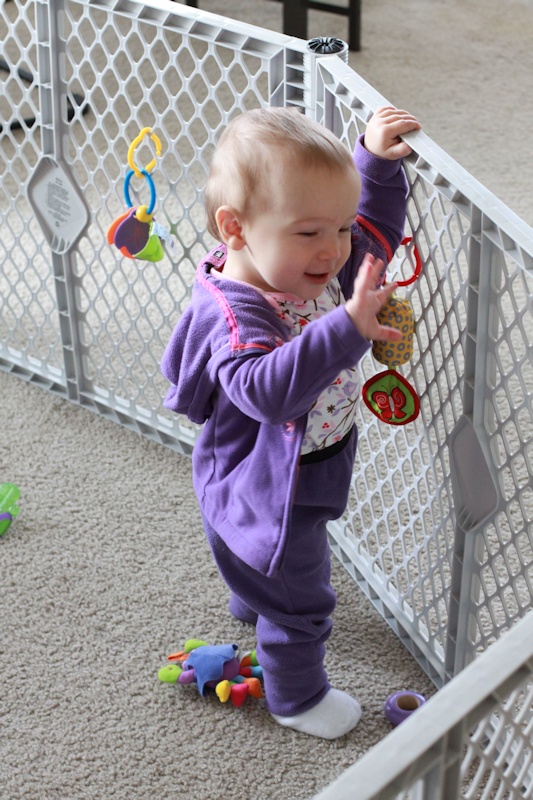
 We went to the National Gallery of Art this afternoon. It was the second visit for Nora and we went to see the modern art section this time. To be honest, I am not a big fan of modern art but Nora liked it a lot. She especially enjoyed watching the mobiles and the large brightly colored paintings.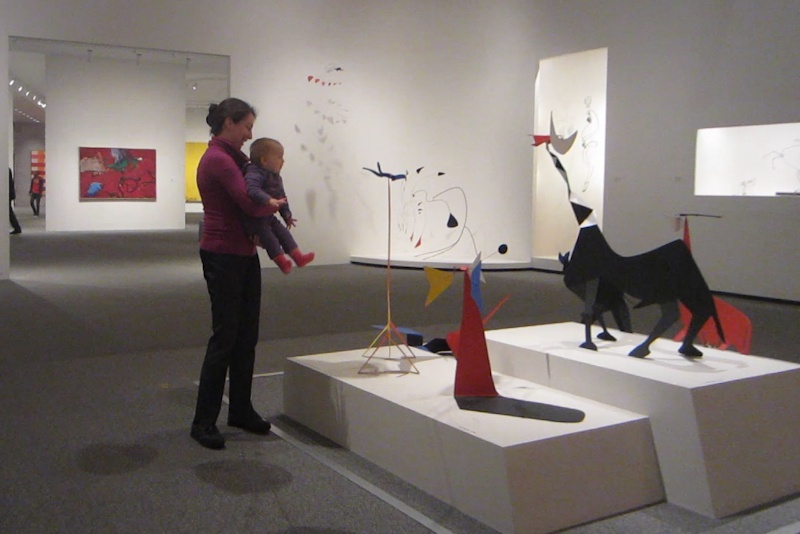

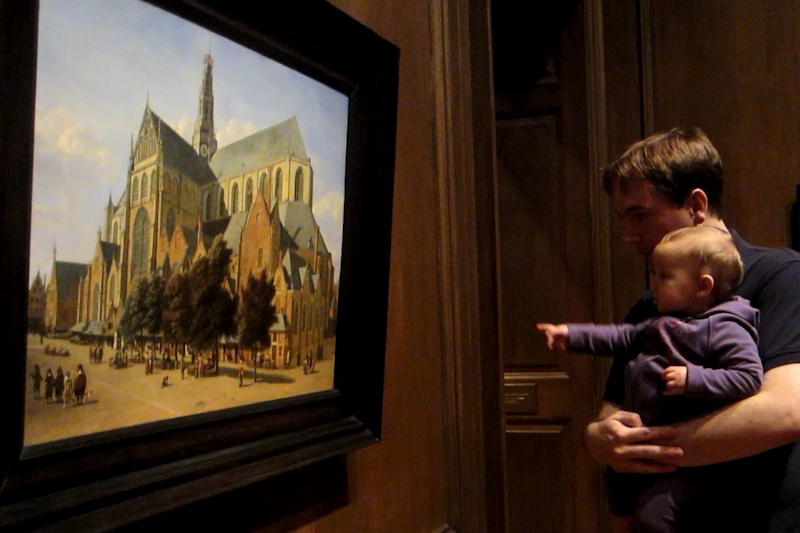
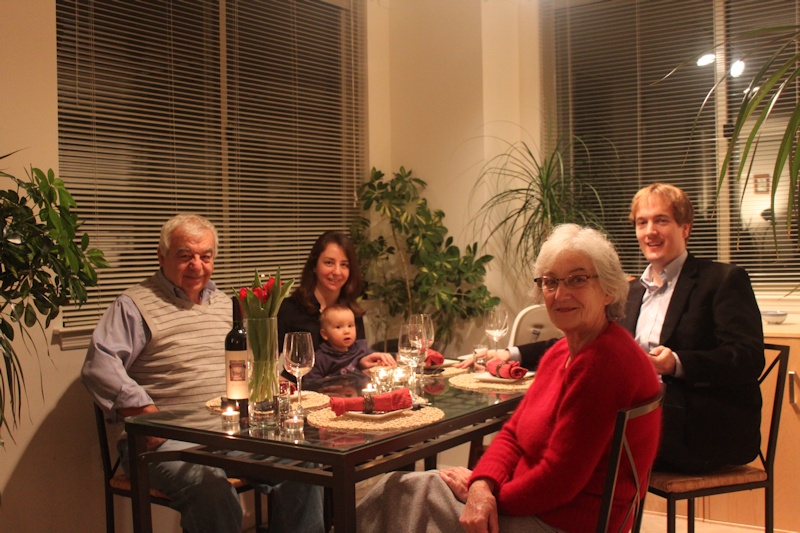
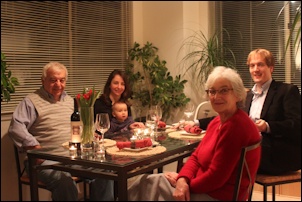 Yesterday we celebrated New Year's Eve with a nice family dinner with Milan and Nadia. Food was our beloved traditional set of dishes -- mlechna and ruska salad, roasted turkey on home-made sauerkraut and Nadia made a great baklava dessert. A bowl with oliebollen complimented the meal.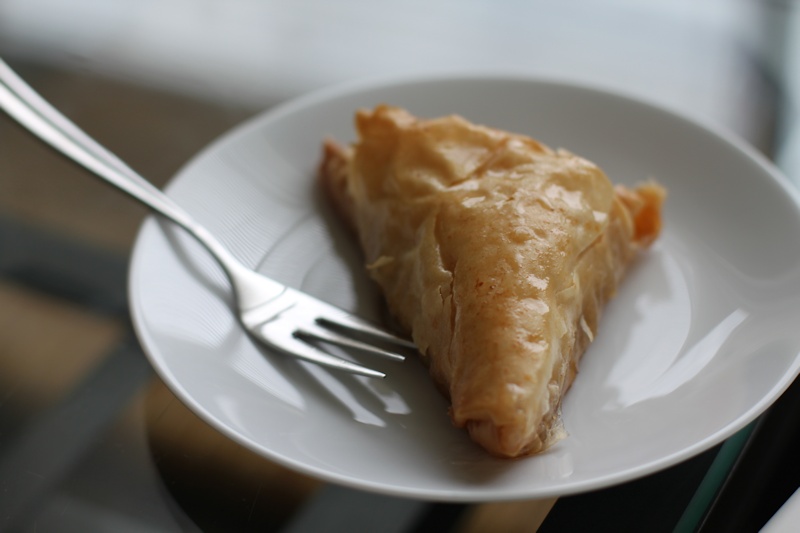
 We spent Christmas Eve and Christmas Day with the Zane family.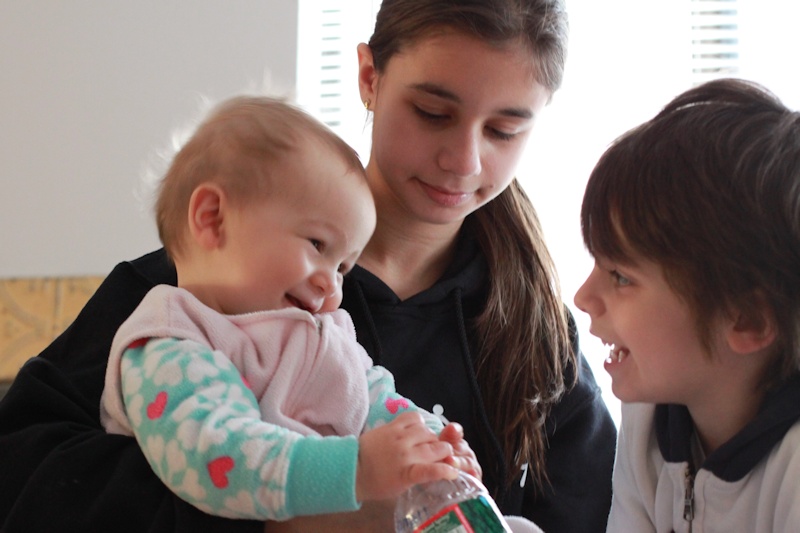
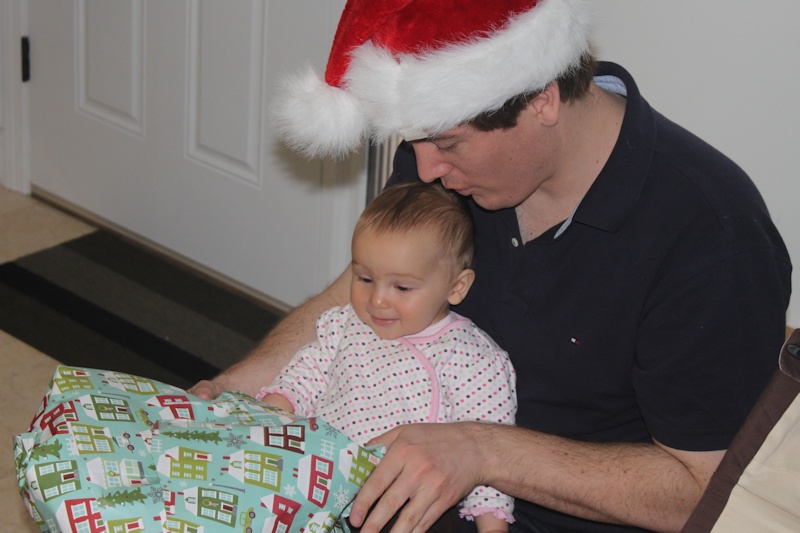
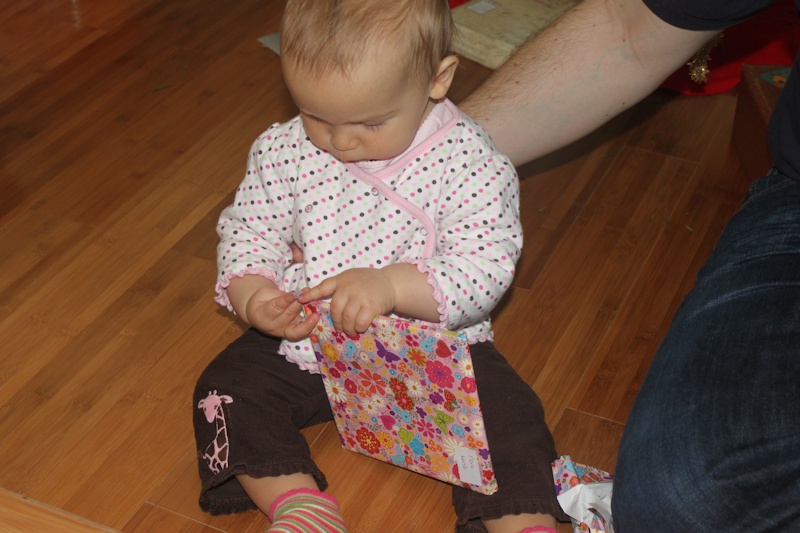
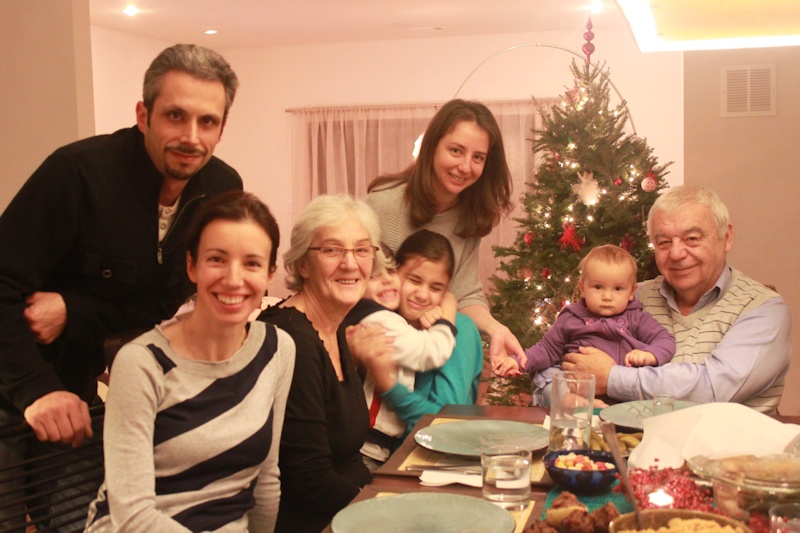
 Nora is 10 months old today. She has started crawling around the room, and we have blocked off our plants and the bookshelves.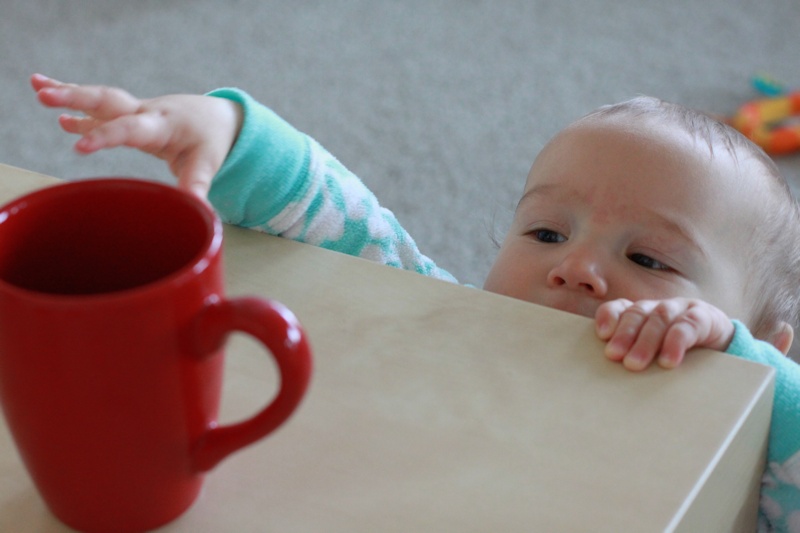
 Two new e-books about famous Dutch-Americans are now available on Amazon. The author, Professor Emeritus Carl Pegels of the University at Buffalo, is a well-known researcher of Dutch-Americans who has written numerous books and articles.
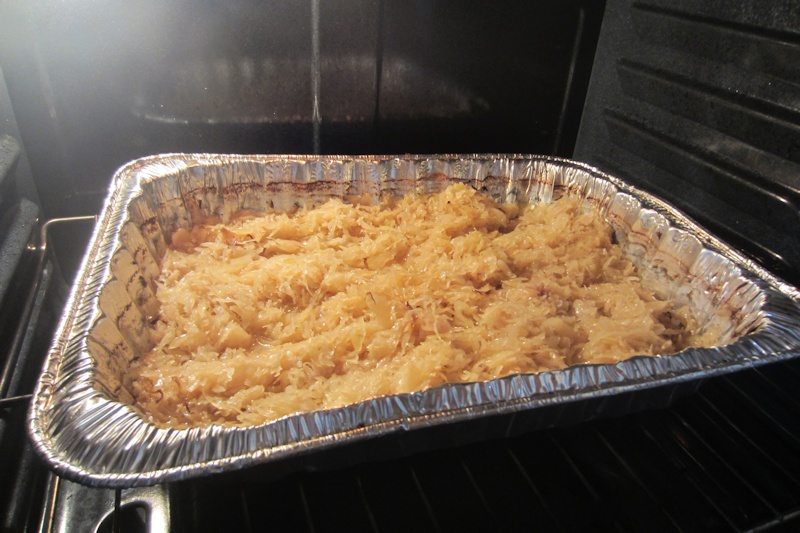
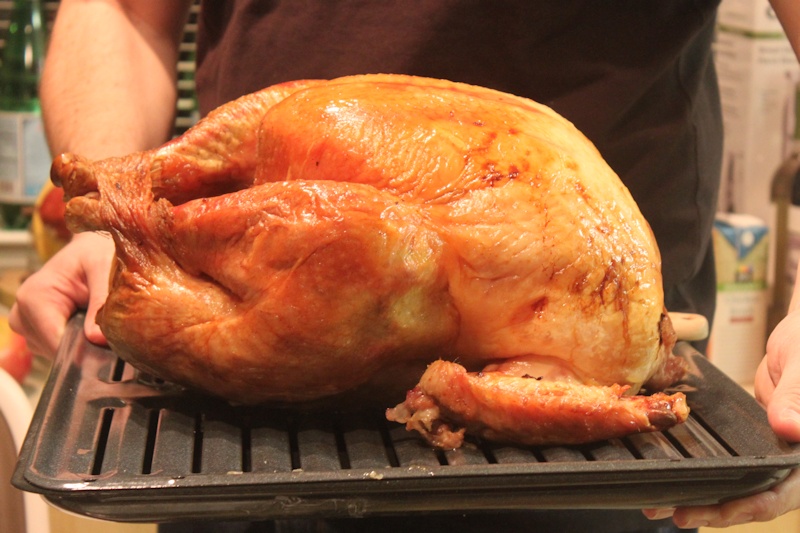
 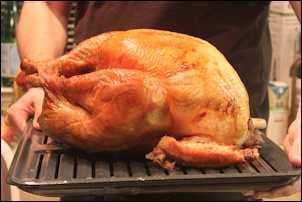 Just like in the States, turkey is a popular dish for Christmas in Bulgaria. However in Bulgaria the turkey is roasted on top of a thick layer of sauerkraut, which makes for a wonderful side-dish. In Bulgarian, this dish is called пуйка с кисело зеле.
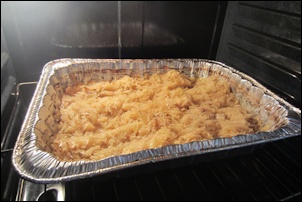 When the turkey is done it will most likely be "swimming" in a bath of juice. Take the turkey out of the dish and place it on a rack. Now, scoop the juice from the baking dish -- save this for future cooking, it freezes well -- but leave the sauerkraut with a little bit of juice. Place the baking dish with the kraut back in the oven, in the middle rack. Now, use the oven's broiler for 30 to 60 minutes or so, while stirring the sauerkraut every 5 minutes. This will dry it out and give it a bit of a crunch.