How a Dutch immigrant brought European music and style to New Jersey.
 Many Dutch immigrants to the United States bring with them memories and items from home. Few will bring a 2,600 pound, car-sized street organ, as Johanna Vander Heijden did. Here is her story.
Dutch immigrants
In the Netherlands Mrs. Vander Heijden and her husband Ton lived on a farmhouse from the 1780's in Pijnacker and they shared a love for antiques. Pijnacker is a town near Delft, in Zuid-Holland. Mrs. Vander Heijden: "This is Holland at its best, between the two major cities The Hague and Rotterdam. I still miss it!" They collected many French antiques and decorated their home with them.
Mr. Vander Heijden, an engineer, worked for an American company and in 1984 they moved with their daughter Monique to the United States. "I had said I would follow him wherever, but I didn't realize he was serious about moving to the States". After they arrived in the U.S. they lived in Parsipany, NJ for two years. When they moved to Buttzville, New Jersey two year later, Mrs. Vander Heijden opened her boutique Showtime in Belvidere, NJ. They transported their French antiques for their home and the boutique and decorated the interiors in a beautiful style.
 Music and a meatball with a slice of white bread
"My family played the button accordion ("knopjes accordeon") in cafe's at the Noordplein in Rotterdam: my grandfather before World War II and my sister Cobie until the late 1960s. When she was a kid she would play on Sunday afternoon in cafe's in Rotterdam. The payment was a meatball with a slice of white bread. I was too little to join, but nowadays I frequently play at events. And of course, on request I'll play in Showtime when we have an event, for example the French musette." Mrs. Vander Heijden's daughter Monique continues the musical tradition and is a music manager for songwriter Gar Francis.
"There was always music in my family, and we had to learn the accordeon. I'm still grateful to my grandfather (opa) that he took the time and patience to teach his granddaughters that very difficult instrument. When I play 'De Kast' at Showtimes' events I always think of that." Mrs. Vander Heijden: "A button accordion is totally different than a piano keyboard. The buttons on both sides makes it very hard to learn. The sound of an accordion is very similar to a street organ, which is one of the reasons we bought one."
In 1993 Vander Heijden went looking to purchase a street organ in Holland as a birthday present for her husband, who loved the "big organ sound". They met Gerhardt Roos, a craftsman who had restored an old street organ.
Mrs. Vander Heijden: "During World War II there were no street organs at all. The Nazi's were confiscating them so the Dutch people took them apart and hid them. After the war, people knew the war was over because the street organs came back onto the streets." Violanta, however, became the "forgotten street organ" and remained in various hiding places for 35 years before Mr. Roos found it and started working on it. "It took him many years to find all the pieces and put them together," Mrs. Vander Heijden explained.
After long negotiations, Mr. Roos agreed to sell the organ to the Vander Heijden's when he found out it would go to the United States. The couple had the delicate piece crated and shipped by boat to Philadelphia.
Draaiorgel in New Jersey
A typical street organ in Holland is mounted on a cart and pushed through the city streets where the operator stops and plays for donations. Vander Heijden's street organ, called Violanta, which means "little powerful", was built in 1920. The large organ was originally used to play music at summer festivals and was pushed along streets in the spring, fall and wintertime. "Every town had a street organ. It was very fashionable," Mrs. Vander Heijden explained. "They would push it through the streets."
The organ has 68 wooden pipes, drums, cymbals, violins, flutes, large bellows, and castanets. The exterior is decorated a scene depicting Holland's green pastures and lakes. Two beautiful gypsy girls look out at listeners from either side. Dominating the center of the piece is a mechanical conductor whose arms move up and down in time to the music. Traditionally vendors would manually crank the organs for hours on end but the Violanta's music is run mechanically with a motor.
The books of music are "read" by the organ like a player piano and range in pieces from American to classical and European. Since each street organ is different, books are made to order. A few months ago Mrs. Vander Heijden was in the Netherlands and had a new book made, "Painted Black" by the Rolling Stones.
The Violanta is often on the road, for example at the annual Belvidere Victorian Days and the Sinterklaas celebration at the Van Wickle House in Somerset, New Jersey. Johanna loves to play music: "Children dance, and adults are emotionally touched. I always see a smile on people's faces when they stop to admire the organ. It's really quite something."
The Violanta even made Dutch national TV when the Mrs. Vander Heijden was on Wall Street when a major bank went public in 1997 and she rang the bell. Recently the street organ participated in the NY400 celebrations in New York City. Two CDs with the street organ were created as well, "Street Organ, The Violanta", each over 60 minutes of great recordings of songs such as "Amsterdam Medley", "Klein Cafe" and "Greeting to Breda".
Violanta, Inc.,
472 Rt. 46 West
Belvidere NJ 07823
Telephone: 908-453-3111
Violanta: http://www.myspace.com/violantastreetorgan
Showtime: http://www.myspace.com/showtime46

Johanna Vander Heijden with the Violanta.

The Violanta.

A mechanical doll on the Violanta.

The backside of the Violanta. In the background on the right is the Van Wickle House in Somerset, NJ.

Showtime, Mrs. Vander Heijden's store in Belvidere, NJ.

CDs with Violanta's music.
 Today is St. Patrick's Day, a cultural celebration of 'being Irish'.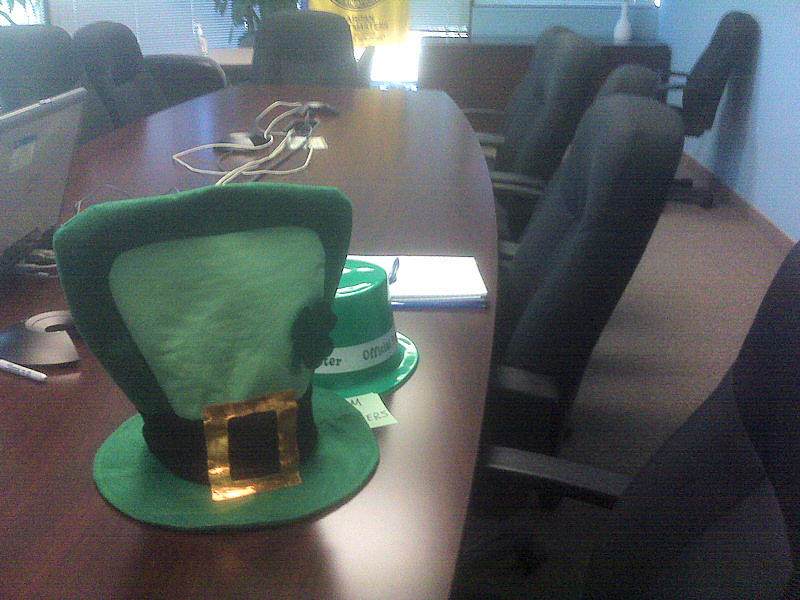
 An exhibition with winter landscapes by Hendrick Avercamp will open this Sunday in the National Gallery of Art in Washington, DC.
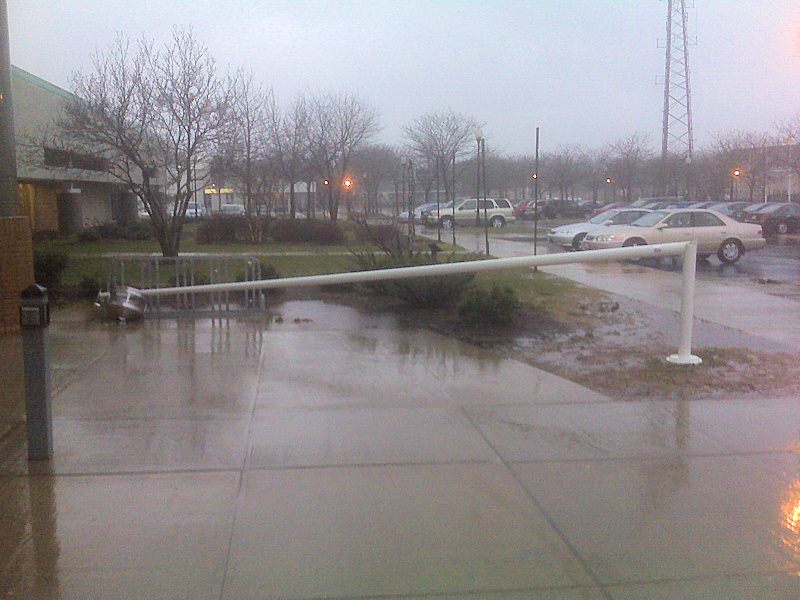
 It's been raining really hard since Friday evening, and with the strong wind it has caused a lot of trouble. When I drove to the library yesterday afternoon Elizabeth Road was partially flooded and I had to drive through tire-deep water. The flag pole at the library was broken.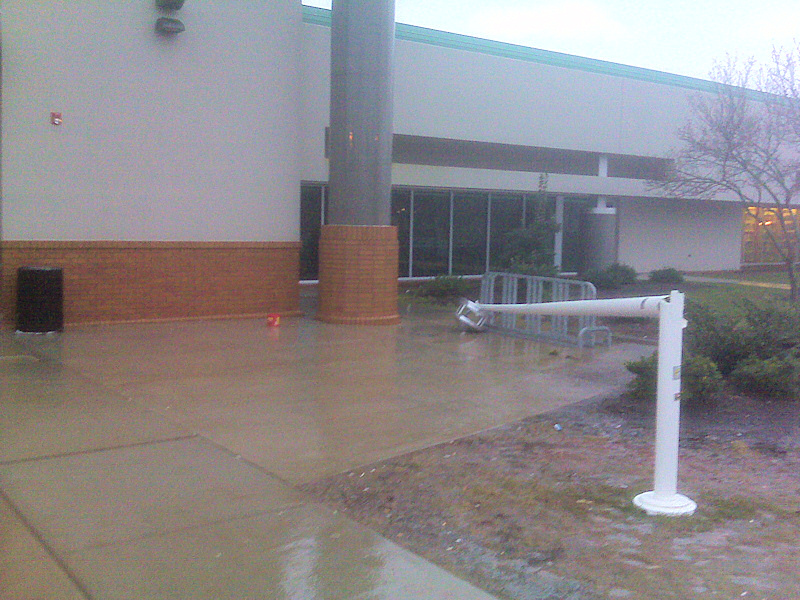
 The New York Transit Museum is opening an exhibit featuring many Dutch artifacts dating back to the 1600s. The exhibit entitled "Where New York Began: Archeology at the South Ferry Terminal" will be on public display in the museum's Annex in Grand Central Terminal from March 18, 2010 through July 5, 2010.
 Many of the 17th century pipes found on the site can be traced to manufacturers in Amsterdam and Gouda based on their makers’ marks. Three lettered initials were common marks used on early Dutch pipes. Research from other New York digs suggests that “MTS” was owned by English-born Matthias Stafford working in Amsterdam. Some marks were passed down through generations of a family, such as the “hand” mark on a pipe here that was passed down through various De Vriendt family members for 63 years. Other marks were bought and sold or rented by local pipemakers, such as the three-leaf clover mark exchanged between dozens of pipemakers between 1660 and 1840.

 Census forms will be sent to every household the United States in the next weeks. Unlike previous years there will be no separate questions on language or heritage, so there's no opportunity to mark "Dutch" on the form for those Dutch-Americans eager to indicate their heritage.
 As we
As we 
 The temporary apartment we're staying at in Somerset is furnished, and many kitchen utilities are included. This is convenient. The coffee machine though, makes truly terrible coffee and we often resort to getting coffee from Starbucks or from the office of our apartment complex.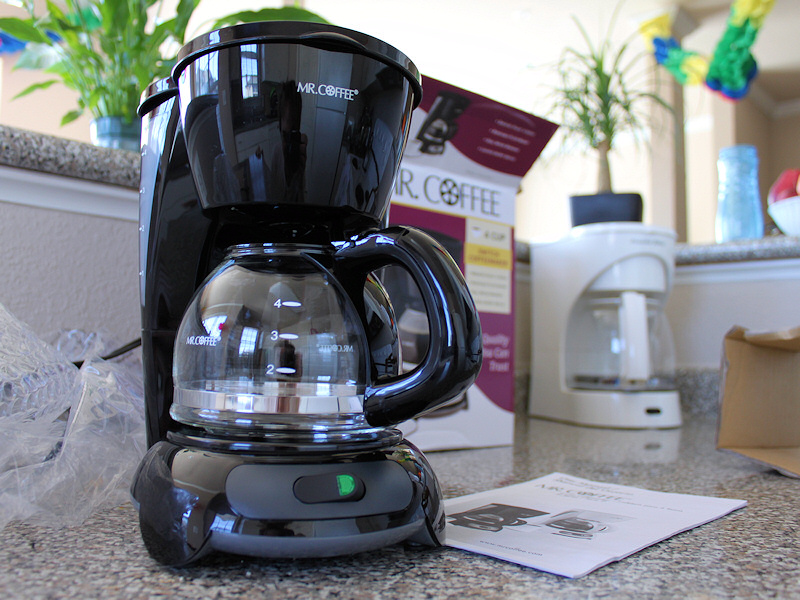
 Observations of a Celebration NL & NY 2009 is a newly released book with interesting observations on the NY400 celebrations. The Dutch government organized many festivities in New York City last year to commemorate the arrival of Henry Hudson in 1609 in New York. Mrs. Pel, the author, wanted to see the events and get an idea how the Netherlands was represented in New York.
  Our office is closed for today due to snow, so I'm working from home again today. Sasha's flight is today, let's hope it will go.